And they say we’ll have some fun if it stops raining

Image

He only gave us 48 years (1924-1973), and his musical compositions peaked and all but disappeared after 1963. But as I was preparing supper tonight, I found myself humming again one of Allan Sherman’s memorable parodies:

O, the moon is bright upon the carwash
And I’m having my Volkswagen washed again
But the way it is with me, the way my luck runs,
Just as soon as they’re finished it will rain.

The song segues illogically into

On top of Old Smokey,
All covered with hair.
Of course I’m referring
To Smokey the Bear.

Allan Sherman was a television comedy writer and producer who made it big in 1962 with his long playing album My Son the Folksinger, which sold a million copies. Most people remember him for his parody of Dance of the Hours by Ponchielli: Hello Muddah, Hello Faddah, Here I am at Camp Granada …”

But for those of us with a high tolerance for lyrical puns and simple satire, Allan Sherman’s songs remained stuck in our heads for the rest of our lives. My all-time favorite was his send-up of the French Revolution mimicking the rhythms of You Came a Long Way from Saint Louis” (“You Went the Wrong Way Old King Louie”).

But who, having heard them once, could forget Sherman classics such as:

When you go to the delicatessen store,

Don’t buy the liverwurst.

Don’t buy the liverwurst.
Don’t buy the liverwurst …

Oh buy the corned beef if you must,

The pickled herring you can trust,

And the lox puts you in orbit AOK.

But that big hunk of liverwurst

Has been there since October First,

And today is the Twenty-Third of May.

Or his homage to Gilbert and Sullivan: “I’m called little butterball.”

When I put on my earphones for my morning walks, my iPhone is usually tuned to the Grateful Dead or Norah Jones.

But I’m convinced that as I grow older, the last tunes to rattle in my head will be Allan Sherman tunes: deep, soothing, irrepressibly funny, and impossible to forget.

They say Allan Sherman’s fame declined when the nation’s sense of humor changed following the death of President Kennedy in 1963

That could be true, because the short, pudgy songster and tall, slender president had something in common. If Wikipedia can be believed, Sherman’s send up of Frère Jacques soared to the stratosphere when JFK was overheard singing it in a hotel lobby.

Posted in Uncategorized | Leave a comment

Miss Butts, Meet Mr. Sitts

Miss Butts, Meet Mr. Sitts

The Butts are long-time neighbors of my grandparents, Goldie and Addison Jenks, in the cemetery in Oneonta. I like to imagine the permanent residents sitting in rows of folding chairs, as if they were in a Thornton Wilder play. There’s Grandpa, scowling silently as he sucks on a crusty corncob pipe. Grandma smiles as she turns to engage her neighbors in friendly conversation. The Butts pout shyly and pretend they don’t see the leering grins of passersby who read their names on the stone. But I wonder: when the moon slips behind a cloud and the night is darkest, does Elizabeth blush as she reminisces about the day friends of Earl Sitts approached her and said, “Lizzie, dear, we have just the man for you.”

Posted in Uncategorized | 2 Comments

Band of Typists

See http://bit.ly/ChAssts


Posted in Uncategorized | Leave a comment

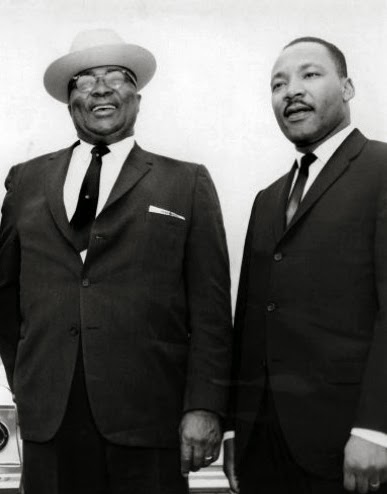
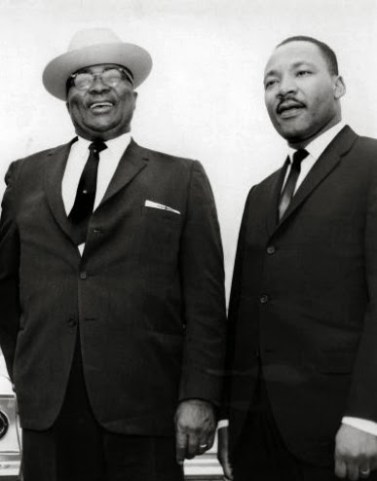
Remembering Martin

Image

April 4, 2014 — Remembering the dreamer and his Daddy. From my January sermon celebrating MLK’s birthday.

Paul, called to be an apostle of Christ Jesus by the will of God, and our brother Sosthenes,

To the church of God that is in Corinth, to those who are sanctified in Christ Jesus, called to be saints, together with all those who in every place call on the name of our Lord Jesus Christ, both their Lord and ours:

Grace to you and peace from God our Father and the Lord Jesus Christ.

I give thanks to my God always for you because of the grace of God that has been given you in Christ Jesus, for in every way you have been enriched in him, in speech and knowledge of every kind just as the testimony of Christ has been strengthened among you so that you are not lacking in any spiritual gift as you wait for the revealing of our Lord Jesus Christ. He will also strengthen you to the end, so that you may be blameless on the day of our Lord Jesus Christ.

God is faithful; by him you were called into the fellowship of his Son, Jesus Christ our Lord. 1 Corinthians 1:1-9

… For in every way you have been enriched in him, in speech and knowledge of every kind just as the testimony of Christ has been strengthened among you…


Paul seems to be indulging in a bit of public relations hyperbole with the church in Corinth. 


The church members may have been enriched in every way, but they’re not as perfect as Paul makes them seem in the opening paragraph. 


Later he reminds them of their spiritual immaturity and complains about their divisions and arguments. But certainly they are better people than they would have been without Jesus. Each of them – like Paul – can recite the oft-quoted prayer: “I’m not where I need to be, but thank God I’m not where I was.”


This weekend, as we commemorate the 85th birthday of our fellow American Baptist, the Rev. Martin Luther King, Jr., these thoughts are worth pondering.


Looking back on his ministry, we thank God for Martin’s moral and rhetorical genius. In every way, he was clearly enriched by Christ, in speech and knowledge of every kind, and used his testimony of Christ to give divine authority to the Civil Rights movement. He gave direction and cohesiveness to the campaign to remove legal impediments to justice and to diminish the racism that demeaned the American dream. His intellect, his courage, his eloquence, and his grit combined to make him one of the great figures of the 20th century.


It is entirely appropriate that we have engraved his image on postage stamps and carved larger-than-life stone monuments to his memory.


But as we celebrate his 85th birthday, let’s also allow ourselves a moment to regret that in making him a cold granite figure, we have lost contact with the warm, passionate, and often imperfect humanity of the man. 


When I started work at the American Baptist Churches offices in Valley Forge, Pa., in 1971, I worked with many people who had known Martin, marched with him, strategized with him, sat on platforms with him, and befriended him. 


As I listened to stories of Martin, I quickly noticed everyone had a different view of him. Even today, if you talk to some of the old ladies at Ebenezer Baptist Church in Atlanta, they will happily regale you with unique stories no one else knows. “Let me tell you,” they will say, leaning close to your ear, “Martin’s favorite hymn was, ‘Amazing Grace.’” But don’t write that down. The next old lady will get a far away look in her eye and say, “I remember Martin telling me how much he loved, ‘Be Not Dismayed whate’er Betide, God Will Take Care of You.’” And later, as, you sit down in the old fellowship hall for dinner and ask your hostess if she knew Martin, she’ll reply, “Oh, my yes, and he once confided to me that his favorite hymn was, ‘It is well, It is Well, With My Soul.’”


It makes one wonder how many people historians have interviewed when they write their books. The one fact about Martin than I’m sure of, because empty bottles of it are prominently displayed among his personal effects in the MLK museum, is that he liked Aramis cologne. 


Baptists who knew him well remember he also liked to play pool and, when he was with Baptists willing to conspire with him, he sipped Dewars whiskey on the rocks. He smoked True cigarettes. He had stepped out on the balcony of the Lorraine Hotel to have a smoke when he was shot in April 1968. 


Reminiscences among my American Baptist colleagues are varied. My first boss, Dr. Frank Sharp, who was head of American Baptist News Service in the seventies, regarded M.L. as “a difficult celebrity,” in part because it was Frank who negotiated with Martin’s staff to get him to last-minute meetings and hastily scheduled press conferences on time, an almost impossible task. Dr. William Scott, ABC executive minister in Buffalo, met Martin shortly after the successful resolution of the Montgomery Bus Boycott in 1955 and wrote in his diary, “He is young and inexperienced and in no way prepared for the leadership that is about to be thrust upon him.”


Dr. William T. McKee, the first African American to head a national American Baptist program board, was responsible for supervising me as director of communications for the ABC, and I would spend hours in Bill’s office as he tried to keep me out of political trouble. 


Bill, who grew up in Berean Baptist Church in Brooklyn, knew Martin well and often got tears in his eyes when he talked about him. When Bill served on the national staff of the ABC Ministers and Missionaries Benefit Board (MMBB) in New York, he was often in contact with Martin England, a white MMBB staff member in the ABC of the South. 


Both Bill and England were concerned that Martin Luther King had no life or health insurance, and they both pressed him to sign up for MMBB benefits. According to Bill, Martin kept putting it off but finally agreed to sign the application form in 1963, five years before his death. Bill’s eyes would overflow when he talked about that. “If he hadn’t, his wife and children would have had nothing,” he’d say. I heard the story often.


“I called him Mike,” Bill would say quietly, almost as if no one else was in the room. It was from Bill that I learned that Martin and his father had been named Michael King when they were born, and the elder King changed it to Martin Luther King, in part to satisfy the last request of a dying grandfather. But close friends continued to address the two by their original names. Insiders knew them as Big Mike and Little Mike. This is not a secret, of course, but neither is it widely known.


Martin was assassinated in 1968. My kids, all of whom were born after 1976, tended to think of him as a distant historical figure, lost in the archival dust along with Frederick Douglass and Thomas Jefferson. Even before my hair began to thin out and fade to gray, though, the kids suspected I was old enough to have encountered some of these old-time figures. But they figured they had really underestimated my age when they asked if I had known Martin Luther King, Jr.


“No,” I replied. “But I knew his father.”


“His father?” None of the kids ever challenged that. They always had trouble figuring out when I was making things up. They still do.


But I did know Daddy King. He remained a loyal American Baptist all his life and attended many ABC biennial meetings when I was on the staff. One time I stood behind him in the J-K line at the registration tables and listened to a young African American woman on the other side of the table ask his name.


“Martin Luther King Senior,” he said, carefully accentuating each syllable.


The young woman giggled.


“No,” she said nervously. “I really need to know your name.”


I was standing behind him, looking at the back of his large gray head, so I couldn’t tell if he was smiling or not. But he did make it clear he was not teasing.


“Young lady, I am Martin – Luther – King – Senior. And I am quite sure of it.”


The chastened young woman handed him a registration card, and the great man wandered away.


I was invited by an ABC colleague to have coffee with Daddy King during that meeting, and not long afterwards The American Baptist magazine interviewed him for an anniversary story honoring his son. He sat serenely at his desk and opened letters with a silver knife as he answered questions. His voice was so deep and cavernous that a staff writer and I argued whether to compare it to “pebbles falling on a tin roof,” but we decided that would be disrespectful. We reported that his voice was “deep.”


We probably asked him questions he had heard before. We asked if he was bitter following the murder of his son and the loss of other family members, and he quoted the King James Bible: “Love your enemies, bless them that curse you, do good to them that hate you, and pray for them which despitefully use you, and persecute you.” 


I don’t recall the exact year of the interview, but it was after Daddy King had lost a second son, A.D. King, who died in a swimming pool accident in 1969; and after and his beloved wife, Alberta, playing the organ in Ebenezer in 1974, was shot by a deranged man who had planned to shoot her husband. 


The elder King’s quiet grace and determined forgiveness were almost super human and a marvel to those who witnessed it.


If you talk with aging members of Ebenezer Baptist Church today, there is one thing on which they all agree: Martin Luther King, Sr., was the model of love and the harbinger of justice that molded his oldest son into the singular civil rights leader he became.


Baptists who attended the funeral of Martin Luther King, Jr. in Ebenezer Church in April 1968 have many stories to tell: how President Lyndon Johnson sat frowning and drenched in sweat in the middle of the congregation, or how Ralph Abernathy saw Bobby Kennedy in the rear of the church and went to the microphone to invite him to the front. 


But many remember a more private moment, when Daddy King saw his son lying in the coffin for the first time. Daddy King began to weep and reached out to his son – some say it was if he was trying to wake him up – and whispered, “He never hated anybody. He never hated anybody.”


Daddy King worshipped at Salem Baptist Church in Atlanta on November 11, 1984. Later that same afternoon he suffered a heart attack and died at 5:41 p.m.


I don’t know what his last words were, but when I heard he died I thought of his four word eulogy for his eldest son: “He never hated anybody.”


What better way to sum up a life? Probably none of us would be comfortable with the opposite assertion, “He loved everybody.” Who among us is capable of that? Even if we have been spared the violent deaths of loved ones, who among us have not experienced insult, bigotry, unfairness, intolerance, xenophobia, sexism, ageism, or discrimination? There are simply persons who cross our paths who are unlovable. And perhaps the hardest commandment of Jesus is to love our enemies. Chances are we cannot, if we are honest, claim that we love everybody.


But with God’s help, it may be possible to get through the snares and thorns of life without hating anybody. That would be grace indeed.


Martin Luther King – Junior and Senior – never hated anyone. But more than that: each had cultivated the divine spark which is planted in all of us but nurtured by few of us. 


Daddy and Martin King had what Jesus bestows: the power to live lives of purpose, a power so vivid that it inspires directionless persons to breathe life into their own divine spark, setting them on the path to faith and endowing that faith with an unwavering moral purpose.


Millions were inspired to a higher moral purpose by the example of Martin Luther King – Junior and Senior, Big Mike and Little Mike – and because they lived, the world is very different than the world into which they were born.


But today’s world is still imperfect, and God is still calling each of us to continue the march that was enhanced so powerfully by Big Mike and Little Mike, and not so long ago.

Like them, we seek to be enriched in him, in speech and knowledge of every kind, praying Christ will strengthen us so that we are not lacking in any spiritual gift: especially the gift of humanity, and the grace to love our neighbors as we love ourselves.

Posted in Uncategorized | Leave a comment

Lyndon, Curt & Me

Image
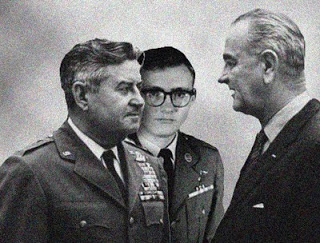
April 1, 2014. This previously undisclosed letter from President Lyndon B. Johnson requires some explication.

To make a long story short, I was the best Latrine Queen in the Air Force.

Anyway, that’s what Curt LeMay said. Just ask him.

Oh, right. He’s dead.

But you can believe me.

It all began in October 1964. I was in basic training at Lackland Air Force Base, Texas, struggling to find my niche in the military hegemony.

I got a nearly perfect score in the Air Force aptitude test in mechanics, achieved by guessing my way through several pages of multiple choice questions, and I tested high in typing. Early on, it looked like I’d be spending four years repairing jets or typing supply requisitions. Neither possibility seemed heroic (although as I think about, it’s improbable that jets maintained by me would stay in the air long enough to liberate the Mekong Delta). I began to question whether volunteering for military service had been such a good idea.

Then one morning Sergeant Ellefson, our barracks chief, said he detected stubble on my face. This was likely a ruse because, at 18, I had never shaved a day in my life, but sergeants had a highly personalized view of reality and it was rarely a good idea to challenge it. So I checked an impulse to stroke my fuzz-free cheeks and said, “Yes, Sergeant.”

“And this is what I’m gonna do about it,” Ellefson said. He led me into the barracks latrine – a room equipped with an open-bay shower, 12 sinks and two rows of redolent commodes facing each other – and said the words that would change my life.

“You’re gonna be my Latrine Queen,” Ellefson said. “And every morning I wanna see these commodes so clean General LeMay can eat breakfast out of ’em.”

Ellefson didn’t seem like the kind of guy who used hyperbole, so I said, “How does he like his eggs?”

“You’ll find out,” he said, and left me alone in the Latrine.

It is now almost forgotten that Curtis E. LeMay was the Air Force chief of staff. He was a hard-nosed S.O.B., the father of the Strategic Air Command, and the World War II commander who oversaw the destruction of Japan from the air. Later, he applied the same strategy to North Vietnam.

I was stunned when Sgt. Ellefson strode out of the latrine, leaving me alone with so much stained porcelain.

But I had grown up in a household where clean toilets and godliness were theologically fused and I knew exactly what to do. I armed myself with sponges, scowering powder and cans of pungent disinfectant and set to work. By the end of the day, my nose smarted with lingering fumes of ammonia. More to the point, the harsh glare of white porcelain that glowed like our transfigured Lord, brought tears to my eyes.

The next morning, Sgt. Ellefson’s mouth dropped open when he came into the latrine.

“God DAMN,” he said. “God DAMN.”

He stroked the silvery faucet of one of the sinks, and admired his unblemished reflection in one of the mirrors. He stepped back to view the full pristine panorama and he began to smile. “God DAMN.”

Sergeant Ellefson placed me on full-time latrine duty. That was fine with me because it replaced the more onerous trials of boot camp, like precision drilling and olfactory comparison drills to prove you could tell the difference between tear gas and human pheromones.

And politically, Latrine Queen proved to be an extremely powerful position. It gave me the authority to impose such time-saving measures as requiring my barracks mates to use the latrines in the mess hall and shower in the rain.

But as the eleven weeks of basic training neared at end, I began to worry what the next four years might hold. There were no medals for exceptional commode cleansing, nor did a four year career of urinal polishing seem likely to generate diverting tales to spin in American Legion bars.

Then one day as I was using a cotton swab to clear calcium deposits from the shower heads, I heard a commotion in the barracks. A high-pitched voice yelled, “Ten HUT,” followed by a thunderous rumble as fifty guys leaped off their bunks and slammed their brogues on the linoleum floor.

“Where’s the latrine?” a gravely voice shouted with urgency. “Gotta crap.” This was not an unusual occurrence in San Antonio where northeastern stomachs were introduced to green sausa and burritos. After lunch, stricken officers often found it necessary to pop into the first barracks they passed.

“This way, Sir.” Ellefson’s muffled voice sounded uncharacteristically polite.

“Outa my way, goddam it.”

The latrine door sprung open and in marched a scowling officer clenching a huge Cuban Cohiba in his teeth – unusual even in the earliest days of the Cuban economic boycott. The officer was barrel-chested with thick steel-gray hair. There were four twinkling silver stars on each of his shoulders.

Before I could stammer, “General LeMay, Sir,” he pushed me out of his way and moved earnestly toward the bank of sparkling commodes. But the unblemished souls of his spit-shined low-quarter shoes were too new to resist the polished tiles of the cleanest latrine in the Air Force.

Down went the general.

I watched transfixed as the general’s feet rose and his posterior descended in a fluidly graceful motion, while his arms shot out like a uniformed cruciform.

Abruptly, he was on his back with his limbs fully extended like DaVinci’s Vitruvian man. His wide body spun in a clockwise motion on the shiny floor.

The general’s gabardine uniform offered little resistance to the polished tiles, but when he stopped revolving he surrendered the back of his head to the hard floor. He appeared to be carefully assessing his situation, like the great tactician he was.

I could think of no chapter in the USAF Customs and Courtesies manual that addressed this particular situation. I stood cautiously over the general and leaned forward to make eye contact with him. He scowled upwards at me, furiously chewing the Cohiba.

“General LeMay,” I ventured.

The general narrowed his eyes menacingly. I think he said, “Grempf,” but he might have been swallowing a piece of tobacco.

“How do you like your eggs?”

He appeared to think about it briefly, but then he spat the wetly chewed cigar out of his mouth so forcefully that it smacked against a urinal on the far side of the room.

“Help me up, goddam it. Gotta crap.”

I placed my hands under his arms and pulled him to his feet. As soon as he was erect, he shoved me aside and skidded toward the commodes. He dropped his gabardine drawers and plopped down on the seat. I had gotten used to seeing young basic-trainees seated in the humiliating ritual of collective crapping, but the Air Force chief of staff seemed out of place.

The general carried it off with dignity but never stopped scowling at me. I wasn’t sure what the rules called for, but I assumed they had something to do with standing at strict attention. I refrained from saluting.

Soon (and I spare the reader the auditory and olfactory details of the scene) the general was finished. He stood and tightened his belt.

General LeMay walked to one of the sinks. As he washed his hands he looked around the cleanest latrine in the Air Force.

“Goddam,” he said. “This must be the cleanest latrine in the Air Force.”

Now seemed like an appropriate time to salute. I snapped my right hand rigidly to my forehead, and he responded with a more casual gesture that looked as if he were shooing a fly from his face.

Silently, the general pulled a neatly folded towel from the shelf and dried his hands. When he walked out, I picked up the reeking cigar butt and threw it away.

ImageGeneral LeMay retired from active duty early in my Air Force career, and I saw him rarely after that first latrine rendezvous. When I did see him, it was usually when the chief of staff was called to accompany President Lyndon B. Johnson on his visits to military installations. For the remainder of the general’s career, whenever word came down that LBJ was planning to visit a base, I got a call from a chief master sergeant in the chief’s Pentagon office.

“The old man wants the President to have access to the cleanest latrine in the Air Force,” the sergeant would say. “Get to work.”

On such occasions I would spend a week getting the presidential latrine in shape for presidential elimination, whichever form it might take. On occasion, General LeMay would invite me outside to shake hands with the president.

“Goddam,” LBJ would say. “That must be the cleanest latrine in the Air Force,” and General LeMay would nod happily. I would stand modestly between the two men, trying not to expose the pride that was swelling in my chest.

But pride was warranted. I was the best Latrine Queen in the Air Force.

Anyway, that’s what Curt LeMay said. Just ask him.

Oh, right. He’s dead.

But you can believe me.

Posted in Uncategorized | 2 Comments

Jimmy Carter

carterbobmontageJimmy Carter was on the Colbert show this week, offering to become Roman Catholic if Pope Francis remained in office and the invitation was extended by a woman priest.

That’s probably farther than most Baptists would go, but Carter has never been most Baptists. His evolution from born again Southern Baptist to radical advocate of peace, racial justice, gender equality, and marriage equality, has moved him far to the left of many Baptists. But he understands Jesus stands far to the left of many Baptists.

Carter’s presidency was a heady period for Baptists north and south. He regularly worshipped at Washington’s First Baptist Church and most Sundays he taught the adult Sunday school class. Many of my Baptist colleagues rushed to attend the class and returned with highly public anecdotes about their private conversations with the president. One story was that a Baptist executive who taught the class on alternate Sundays was called out of town at the last minute. He called the White House and told Carter, “Mr. President, I just can’t be there Sunday.” Carter replied, “That’s okay, I’ll teach the class. I know you’re busy.” The story is probably not apocryphal.

I met Carter once at the White House, along with several dozen religious magazine editors. We were there to hear the president’s defense of a proposed treaty to return ownership of the Panama Canal to Panama.

I came prepared with a copy of an American Baptist resolution that supported the treaty, and I insinuated myself into a huddle of rabbis, priests, ministers, and other editors who had gathered around Carter. The President had turned away from me to talk to Jim Wall, editor of the Christian Century, and I felt myself being pushed uncomfortably close to him. Bill Dudde, a Lutheran editor who stood behind me, tripped and pushed me against the President. I was could smell his hair spray and jumped back in alarm, expecting to be tackled by the Secret Service. Carter turned toward me and he was not smiling. I held up a copy of the American Baptist resolution and reduced my carefully rehearsed speech to six words: “Mr. President, American Baptists support you.” He turned away and said, “Thanks, I need all the help I can get.”

My subsequent encounters with Carter, when he was an ex-president, went much smoother. Duke McCall, president of Southern Baptist Theological Seminary, invited me to a small reception for Carter during the Baptist World Alliance meeting in Los Angeles in 1985. Carter was gracious and witty and considerably more charismatic in person than he was on television.

Later, the Carter Center in Atlanta called a meeting of church health agencies to discuss health care issues and I went to represent American Baptists. Carter mingled with the bureaucrats for most of the meeting. I stood beside him in the food line and listened to him say to no one in particular that the Center had provided “a Mormon meal, because Mormons follow a diet that makes them the healthiest people in the nation.” My colleague Hugh Pickett of the American Baptist pension board, noticing the absence of red meat on the table, said loudly enough for Carter to hear him: “I’d rather live with Jesus than in Salt Lake City.”

Following the Baptist World Alliance meeting in Los Angeles in 1985, I wrote a column for The American Baptist magazine to praise Carter’s leadership, in and out of the White House. Naturally, I sent Carter a copy of the magazine. His reply was quick and efficient. He made a photocopy of my letter, and wrote his response on it. “Thanks,” he wrote in longhand, “both for the editorial & for sending it to me. Jimmy.”

jcborder

I tend to disagree with historians who believe Carter’s presidency was lackluster and unsuccessful. He maintained high standards of morality and decency that most of his successors could not match.

And in the 33 years since he left the White House, Carter’s moral leadership, based on careful biblical exegesis, has been exceptional.

And if his conditions are met for leaving the Baptists to become a Roman Catholic, I would be inclined to follow him into the fold.

Posted in Uncategorized | 1 Comment

Merrily and Eddie Flum Num, We Love You

Image

I’ve posted this reminiscence of bygone Central New York television on another blog devoted to the Morrisville-Eaton Central School class of 1964 fiftieth reunion. I’m reposting it here for others who may have similar experiences growing up in various television markets.

The Wonderful Magic Toyshop (“A smile is a frown turned upside down”) was on Syracuse WHEN television for 27 years. The program was as well produced as any network fare and, as a recent book on Syracuse Television noted, we viewers didn’t know Merrily and Eddie Flum Num weren’t from Hollywood. In 1996, Jean Daugherty — the toyshop’s Play Lady — recorded the history of the show in Syracuse University’s Courier.

The Class of 1964 was the vanguard of the post World War II Baby Boom, and our coming of age coincided with the rise of television. For our parents, the tube was a miraculous phenomenon and buying a TV set was a major goal for most households. In 1950, 9 percent of U.S. households owned a TV; by 1964, 92.3 percent of homes had at least one TV.

Local Syracuse television contributed importantly to our entertainment and education. At least two MECS students attended live broadcasts of Toyshop. When we were in junior high, Don Miller took his English classes to WSYR to see Jim DeLine’s show, which pioneered the talk-entertainment format. In 1964, late night movies on channel 9 were hosted by Baron Daemon, a scenery-chewing extrovert whose vampirish antics attracted a small but devoted following among MECS students.

Even in the days before HDTV, televisions provided us with a virtual reality that seemed real enough to us. The Mercury rocket launches, the Mantle-Maris race to match Babe Ruth’s home run record, the star-crossed Ernie Davis’s heroics on the S.U. grid iron, JFK’s speeches and assassination, all were events we will never forget.

These events were so real, in fact, that it’s hard to believe they were merely the electronic flickering of a vacuum tube electron gun firing electrons on a fluorescent screen. (See my earlier commentary on television and reality here.)

Posted in Uncategorized | Leave a comment

Mr. Sam’s ‘Pretty Bad Case of Lumbago’

ImageSam Rayburn was elected to the U.S. House of Representatives during the presidency of Woodrow Wilson, and died 49 years later during the presidency of John F. Kennedy. He was Speaker of the House for 17 years, the longest tenure in U.S. history

Rayburn was a protégé of Vice President John Nance “Cactus Jack” Garner, and a mentor of Lyndon B. Johnson. Many historians believe Rayburn maneuvered the narrow House vote that prevented a drastic reduction of the U.S. military only months before Pearl Harbor was attacked in 1941.

Rayburn supported Lyndon Johnson’s presidential candidacy in 1960, and warned LBJ not to accept Kennedy’s offer of the vice presidency. Rayburn considered Kennedy callow and opportunistic, but he loyally supported JFK and his legislative program in the first few months of the New Frontier.

I watched a television interview in early 1961 in which Rayburn was asked if thought Kennedy would be a great president. “He’s a young man of destiny,” Rayburn replied, which was an adept evasion. Even so, I accepted it as a great compliment for the untested president. Back then, I thought all Democrats were friends.

In September 1961 Rayburn’s office announced he would take a vacation in his hometown of Bonham, Texas to be treated for lumbago.

I wrote to him immediately, addressing him as Mr. Sam, and wished him a speedy recovery. He replied quickly, restating his complaint about “a pretty bad case of lumbago.”

Sam Rayburn died two months later of cancer.

His New York Times obituary on November 17 said he was told on September 27 – 15 days after this letter was written – that he was terminally ill.

If his letter to a teen-aged non-voter in New York State is any indication, Mr. Sam kept working until the end.

Posted in Uncategorized | Leave a comment

Javert on My Ass

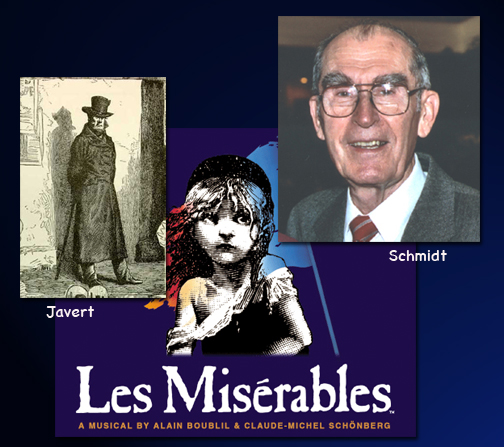
ImageMarch 23, 2014 – The revival of Les Misérables opens tonight.

The Divine M and I saw the final preview last night and plan to see it again (and again) during what we hope will be another long run. The re-imagined staging and computer-generated backgrounds recreate the gloominess of early 19th century France, and the show remains one of the best three-hour sermons extant. It is soul moving, profound, and — as Hugo intended — a testament of God’s subtle presence in the worst of times.

I’ve written about the show several times, including this two-year-old reminiscence:

I always looked forward to Bill Schmidt’s visits to The Ecumenical Center in New York, where I worked between 1995 and 2012.

Bill, who often accompanied his wife, Jean, to the U.S. Office for the World Council of Churches where she was treasurer, looked like the retired church history professor he was.

Tall and lanky with spiky eyebrows protruding like escaping spiders over the top of his spectacles, Bill always wore a dark suit and tie to the office. It was easy to imagine him striking an austere pose behind the podium at St. Peter’s College or New York Theological Seminary, resurrecting the ghosts of bygone ecumenical leaders. I never heard him lecture, but no doubt he was good at it.

Bill would also have made a great pastor. His eyebrows would shoot up whenever he saw old friends, and his supercilious grin always assured them he was glad to see them.

Bill usually had a special word or greeting for everyone. Whenever he spotted me in the office, his brows would dance and he’d proclaim, “Frauds ‘R’ Us!”

That may have puzzled others in the room, but I knew what he meant. The phrase was the title of a column I had written for The American Baptist magazine in 1992. It was Bill’s gracious way of telling another writer, hey, I read your stuff. A prolific writer himself, Bill must have been an insatiable reader as well.


I was thinking of Bill the other day (he died in August 2009) and – wondering neurotically whether I had shown him my best rhetoric – decided to explore old volumes of The American Baptist to find and re-read the column.  


The column was actually a review of Les Misérables, the musical by Claude-Michel Schönberg with an English libretto by Herbert Kretzmer. Martha and I have seen many productions, most recently last March in Hartford. 


Each production has been distinguished by different musicians, performers and staging but they all have two things in common: performances are invariably tear-inducing and they are always sermon inspiring. My eyes overflow each time the chorus sings the words originally penned by Victor Hugo himself: “To love another person is to see the face of God.” 


There are several love stories in both the musical and the novel, none of them more moving that the unrequited love of Éponine for Marius, who only has eyes for Cosette. Éponine loves Marius so much she is willing to give her life for him, even knowing he will never love her in return. Even Jesus doesn’t go that far. Greater love has no one than this.


 The original “Frauds ‘R’ Us” focused not so much on the romance of the story as the morality. Like all good literature, the characters in Les Misérables face decisions that make us all introspective, sometimes painfully so. 


With fond memories of my friend Bill Schmidt, here is the way it looked to me in the July/August 1992 issue of The American Baptist:


javertwillswensonEach year tens of thousands attend performances of Les Misérables, and it’s a good thing the theater is darkened during the show. When the dying Jean Valjean is joined by the spirits of Fantine, Éponine and all the righteous dead, eyes overflow like the cisterns of Paris.

Ever since my preteen catharsis at Old Yeller, that’s the kind of thing I prefer to do in the dark.


The operatic musical is based on the book by Victor Hugo. To summarize it in the way my Lit teachers never would, Jean Valjean steals bread and gets sent to a chain gang for 19 years. When Valjean is released he is inspired to live a righteous life but his criminal path is discovered by the adamant Inspector Javert,* who is determined to bring the bread bandit to justice. While trying to raise Cosette, the daughter of the ill-fated Fantine, Valjean is pursued relentlessly by Javert.

There is also occasional romance and a violent revolution, neither of which is much help to Valjean.


I think one of the reasons people are moved by the musical is that most of us know how Valjean feels. One does not have to be paranoid to get the feeling there is a Javert on our heels, too.

Someone out there knows we’re not as good or as kind or as talented as we pretend we are. The late David Niven felt this way. “I secretly know that I am not good enough an actor to be as successful as I am,” he said. “All my life I’ve been waiting for someone else to find that out. Someday someone will tap me on the shoulder and say, “I’m sorry, old boy, but you’ve been found out. You must come with us now.”


David Niven (who, in my opinion, was a marvelous actor) was not alone. Most of us tend to believe we are actually frauds, and we dread the day Inspector Javert will have us arrested for pretending to be something we are not.


I know the feeling. I was the least athletic member of my family, and after I grew up I tried to cover up that fact by compulsively jogging. Granted, jogging is a rather talentless process of picking ‘em up and putting ‘em down, but I hoped the grunting and sweating would obscure the fact that I am athletically inept.

I was jogging in Philadelphia’s Franklin Field one morning when I was overtaken by the entire University of Pennsylvania Women’s Cross Country Team. 


Attempting to pay my respects to them, I ran on my toes and strained breathlessly to hold in my stomach. I lost my bearings and collided with a tackling dummy. As I lay on the grass looking up at the dummy, it appeared to be a worn, grass-stained piece of second-hand athletic equipment.

Today I know better, It was my own personal Inspector Javert. “I’m sorry, old boy, but you’ve been found out,” it was saying.


Actually, that anecdote is a bit of a cop-out. There are dozens of nasty little secrets in my psyche and in my past – most of them I’d just as soon not index in a national magazine. I don’t need much prompting to remind myself that I am racist or an elitist or a homophobe or a self-absorbed boor with scant sensitivity to the important people with whom I live and work. 


I spend a lot of time trying to improve on that, of course, but the image of innocence I project seems fraudulent to me.


I must hasten to add that I don’t think this is a particularly major confession. It just places me within the mainstream of the human race.

When Paul said all are sinners, he meant all of us are frauds and all of us will eventually be found out. And Paul could not escape the anguish himself. “I know that nothing good dwells within me,” he confessed to the church in Rome (Romans 7:18ff). “I can will what is right but I cannot do it.”


Did Javert ever catch up with Valjean?

Was Valjean thrown back into a drizzly Parisian prison?

Of course you know what happened. If not, Victor Hugo’s thick volume awaits you at your local library.


Javert is a haunting figure because he reminds us what our lives would be like if God had not intervened. Without the Cross, all of us would be relentlessly pursued by the truth of our sins, and all of us would be condemned. 


Happily, there are no Javerts on our tail. God has sent Jesus to seek us out: a tireless pursuer who knows we are frauds and loves us anyway.

With Javert there is only punishment.

With Jesus, there is the promise that ever our fraudulence will one day be transformed for both our sake and his.

* Will Swenson (Pictured above) is Javert in the current run.

Posted in Uncategorized | Leave a comment

Hubert Humphrey and the Moral Test of Government

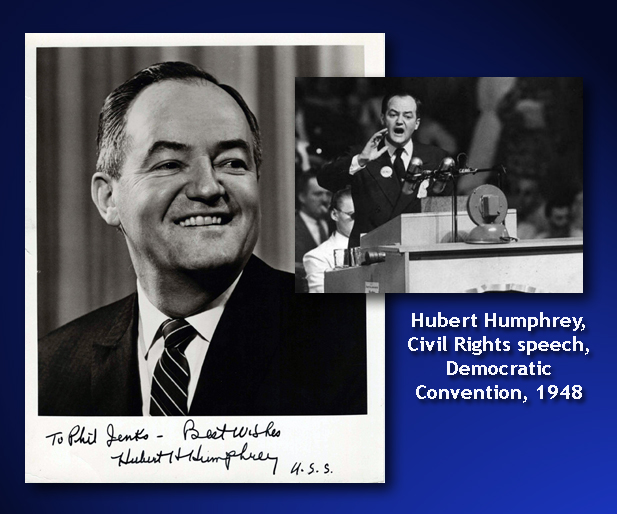
ImageIn politics, location is as important as it is in real estate. Hubert Humphrey was one of the great political and moral leaders of his generation. Unfortunately, he was located too closely to politicians who had more charisma and more power than he, but less vision.

No candidate for president in 1960 has a better record on civil and human rights than Hubert Humphrey, but he couldn’t match the magnetism or pocketbook of John F. Kennedy. In 1968, his presidential campaign was overshadowed by his closeness to Lyndon Johnson and Vietnam. Richard Nixon eked out a narrow victory that year, though skeptics believe that was because Nixon deviously convinced North Vietnam to ignore LBJ’s peace overtures until after the election.

Looking back, one suspects it was tragic that Hubert Humphrey was never President of the United States. His philosophy of government was not always embraced by actual Oval Office occupants:

“It was once said that the moral test of government is how that government treats those who are in the dawn of life, the children; those who are in the twilight of life, the elderly; and those who are in the shadows of life, the sick, the needy and the handicapped.”

If that sounds like ordinary political rhetoric, the difference is that Humphrey meant it. He was a profile in courage from the beginning of his career. When he was Mayor of Minneapolis in 1948, he pushed his fellow Democrats to strengthen their commitment to labor, welfare, and civil rights. He burst upon the national scene in 1948 with a firey address to the Democratic Convention in Philadelphia, calling for a stronger civil rights plank:

I do not believe that there can be any compromise of the guarantees of civil rights which I have mentioned. In spite of my desire for unanimous agreement on the platform there are some matters which I think must be stated without qualification. There can be no hedging – no watering down. There are those who say to you – we are rushing this issue of civil rights. I say we are 172 years late.

The speech helped precipitate the walk-out of southern delegates, who formed the Dixiecrat Party and rallied behind Strom Thurman’s presidential candidacy. The party split seemed to doom President Truman’s chances for re-election.

Humphrey’s speech may have annoyed Truman, who did win the 1948 election, but it propelled him into the U.S. Senate. His progressive record commanded national attention and in 1960 he ran unsuccessfully for president in primaries that were dominated by John Kennedy.

ImageHumphrey continued in the Senate during the Kennedy years and I wrote to him on several occasions, usually eliciting a thoughtful response from him.

In 1964, Humphrey spearheaded support for Lyndon Johnson’s Great Society legislation, including the Civil Rights Act of 1964.

Both Humphrey and the president realized the bill would not be supported by southern Democrats. LBJ recruited Republican leader Everett Dirksen to bring moderate Republicans into the fold, and Humphrey played a pivotal role in bringing the bill to the president’s desk for signing.

LBJ rewarded Humphrey by naming him vice president inn the 1964 election. For the most part, Humphrey was treated badly by Johnson — who, as a former vice president himself, should have known better. But Humphrey was a loyal supporter of the president and his Great Society.

Humphrey’s loyalty included support for Johnson’s Vietnam policy. There is a sad footnote to his vice presidency in which Humphrey was invited to address the general assembly of the National Council of Churches, a long-time progressive ally. He may have been expecting a friendly reception, but the faith leaders lambasted the administration’s “immoral war.”

Humphrey was re-elected to the senate after his difficult turn as vice president and he continued to serve with distinction. After the election of 1976, when Jimmy Carter defeated Gerald Ford, Humphrey paid a friendly visit to the outgoing president.

“I only wish I had had more time,” Ford told him.

“Aw, Mr. President, don’t complain,” Humphrey said. “I would have given anything for a day in this office.”

Looking back, I have no doubt this country would have been much better off if Hubert Humphrey had indeed been our president, if only for a day.

Posted in Uncategorized | Leave a comment