Hell, I even miss Dick.

godimiss

Posted in Uncategorized | 1 Comment

January 12

URwelAm


Port Chester, N.Y., January 12, 2016 – January 12 was a Friday in 1968.

I had been looking forward to the day for months because the Air Force said that was the day I would return to the U.S. after a three-year tour in England.

That was 48 years ago. In each of those subsequent years, I’ve observed January 12 as a personal holiday that marks an important event in my life: the end of my transition from adolescence to adulthood.

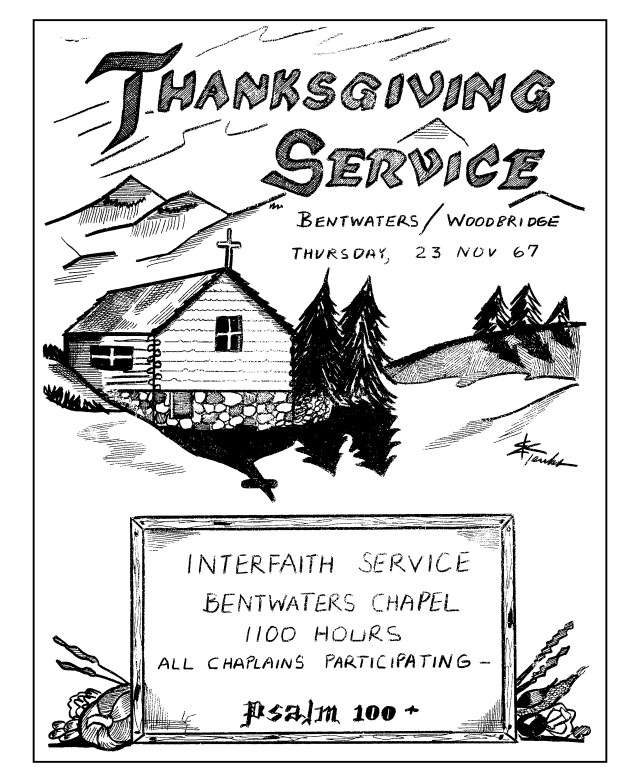
The commemoration, of course, is arbitrary. On January 12, 1968 I was 21 and my cerebral cortex was a work in progress. Even so, I had survived several of life’s common passages. I had left home, endured military basic training, lived in Texas for several months, and managed to find my way from Syracuse’s Hancock Airport to Bentwaters and Woodbridge, the tactical fighter bases where I would spend the next three years.

All of these were notable accomplishments for a teenager from a tiny town in Central New York. Even so, they were not definitive proof of adulthood. The Air Force grooms recruits to make responsible life decisions, so long as they choose to do what they are told. No recruit ever got out of basic training without hearing a sergeant’s precise definition of loco parentis: “While you’re here, I will be your mother. I will be your father. I will be your grandmother and your grandfather. But I will not be your lover, so don’t f**k with me.”

Despite the limited range of choices Mother Air Force offered, I did a fair amount of growing up under her tutelage. I lived in a World War II vintage Quonset hut with three other airmen who could have inspired a Quentin Tarantino romp: a lisping cook who yearned to be a disk jockey and horrified us with explicit fantasies about his sister back home in Detroit; a security police airman with reeking feet who secretly dated the 16-year-old daughter of a master sergeant, and a bathless personnel typist who tried relentlessly to convince us he had a biblical knowledge of Julie Christie.

My days were spent at the Woodbridge chapel across the street, where I was a chaplain’s assistant.

Life in the chapel was an ideal preparation for the ecclesial and ecumenical chores I would have in future years.

But my serene days at a comfortable desk were frequently interrupted by more mundane services to my country, such as monthly KP assignments that began at 0430 hours and ended at 1930, and twice-monthly alert duty. Alerts were little practice wars in which the bases would strive to break speed records for uploading nukes to F4C and F100 tactical fighter jets. My alert assignment was to shoulder an antique M1 carbine and stand menacingly in front of a jet to scare away Commies and the polemicists of the Baader Meinhof Complex, which I always accomplished. It was my contribution to victory in the Cold War.

Despite these frequent unpleasantnesses, I have no unpleasant memories of my Air Force years. These years could well have been the most formative of my life, given that I still dream I never left the Air Force or have been recalled to it as a 70-year-old typewriter jockey with faded chevrons unraveling on my tattered sleeve of care.

I usually don’t dwell on these memories, but they all come hissing back on January 12. Each year on a day that is as dark and cold in Port Chester, N.Y, as it was in England, I resurrect my youth and revisit long past events that seem illogically close at hand.

douggreenebackgroundThis year the Proustian rush has been more vivid than usual thanks to a phenomenon that was unthinkable on January 12, 1968: social media. Yesterday Doug Greene, my good friend from those days, posted on Facebook a picture of himself as he was then: a young airman in England. Looking at Doug’s familiar, young, and smiling face, I realized we shared an experience common to all youth: a total unawareness that time will pass, youth will fade, and the time will come when we have more days to look back on than forward to.

I haven’t seen Doug in decades, but I know we could both write vast autobiographical volumes about our lives since 1968. There would be chapters of comedy and tragedy in each volume, but I have no doubt we both look back with satisfaction on the lives we lived.

But on January 12 each year, I like to reflect on a period when I was aware I was completing one phase of my life and moving on to another.

The blessing of youth is that we seize that new phase with confidence that whatever the future years bring, it will be good.

God knows this is not always the case, and not every year is joyful or good.

But January 12 is my day to reflect on both my past and present.

And it’s a comforting reassurance that I can celebrate the good days long gone and relish the good days now at hand, surrounded by loved ones and connected with old, old friends.

January 12 is my day to take stock.

It’s the day I remind myself that my life – then and now – has been abundantly blessed.

blessingsandpeace

Posted in Uncategorized | Leave a comment

An Imperishable Gift

Thanks to brother Paul Jenks and sister Colleen Jenks for this very special Christmas gift.

The Weeds were my mother Mary’s great-grandparents. As I recall the family story, the elderly Mary Weed lived for a time with Mom’s parents on their Delaware County farm. Mom remembered her father addressing the old woman as “Mrs. Easy Weed,” which was either an expression of affection or Minnesota passive-aggression.

familyheirloomThis precious gift brings the Weeds alive and restores them to family gatherings.

Posted in Uncategorized | Leave a comment

Lies Our Teachers Told Us

feetofclay

This fall some Princeton University students uncovered one of the worst kept secrets in American history: Woodrow Wilson, the 28th president of the United States, was a racist.

If these students had grown up reading Howard Zinn or Richard Shenkman, this wouldn’t have been a surprise. Unlike the historians who wrote our high school text books, these guys tried to tell the truth about U.S. history. The truth – and we didn’t read it in the thick history texts collecting dust in our school desks – included the genocide of native Americans, the horrors of slavery, the bloody imperialism of American expansion, the peccadillos of pious politicians, or the sexual predation of our greatest presidents.

No wonder history is so boring in the 11th grade.

One of my last interviews as a reporter for the Pottstown, Pa., Mercury, was with James W. Loewen, author of Lies My Teacher Taught Me, Everything Your American History Textbook Got Wrong.

On the phone, Loewen came across as a passionate man who never made his peace with the texts that lied to him, especially about some of our most beloved icons.

He was particularly incensed about the mistreatment of Helen Keller, known to most of us baby boomers as the woman who overcame blindness and deafness as dramatized in The Miracle Worker, and who  was featured in My Weekly Reader as she stroked President Eisenhower’s beaming face.

But what the history books left out was the fact that Keller was a far-left radical who campaigned for socialist candidates for U.S. president and openly supported the Soviet Union.

Loewen was also displeased about the incomplete depiction of President Wilson, described in most texts as a progressive leader whose vision of the League of Nations was squashed by short-sighted isolationists.

But, Loewen pointed out, Wilson was also a white supremacist who told “darky” stories in cabinet meetings and ordered the segregation of government offices. The proper Presbyterian president also denigrated any American who was not of white Northern European heritage.

In addition, Wilson – who posed as a man of peace – was chronic interventionist in foreign countries. Loewen wrote:

 “Under Wilson, the United States intervened in Latin America more often than at any other time in our history … In 1917 Woodrow Wilson … started sending secret monetary aid to the ‘White’ side of the Russian civil war … This aggression fueled the suspicions that motivated the Soviets during the Cold War …Wilson’s interventions in Cuba, the Dominican Republic, Haiti, and Nicaragua set the stage for the dictators Batista, Trujillo, the Duvaliers, and the Somozas.”

It’s no wonder that the Black Justice League has called upon Princeton, where Wilson was also president, to remove his name from buildings and institutions where he has been honored. However, given what has always been known about Wilson, the move seems belated.

And, given the truths Zinn, Shenkman, and Loewen have been eager to uncover, one must wonder how many other great figures are undeserving of the laurels we have bestowed on them.

Beginning with George Washington, a slave owner who was conflicted about the efficacy of the peculiar institution, especially after he calculated that the overhead costs of maintaining a slave population often cancelled out the benefits of free labor.

In his Pulitzer Prize winning biography, Washington: A Life, Gene Chernow reminds us of some disturbing facts about the Father of Our Country that were never highlighted in high school texts. As a general and later as president, Washington was attended by a large retinue of slaves dressed in uniforms bearing his family crest. When the U.S. capital was temporarily lodged in Philadelphia, President Washington brought a large number of his slaves along to run his household. He circumvented a Pennsylvania law that automatically freed slaves who resided in the commonwealth for more than six months by returning them temporarily to Mount Vernon every five months.

Washington freed all his slaves in his will (effective upon the death of his wife Martha, which surrounded her with people who looked forward to her passing). And few historians believe Washington’s enormous contributions to U.S. history should be lost in the reality that he was a slave-owning Southern aristocrat who acted like one.

There are other great figures of U.S. history who don’t deserve all the nice things high school texts say about them. President Jefferson had a slave mistress who carried several of his children. President Jackson’s relocation of Native American communities was genocidal and brutal. Even the Great Emancipator, President Lincoln, did not believe African Americans were his biological or intellectual equal.

And in a seemier side of history, which may or may not call into question their political performance, Presidents Cleveland, Harding, Franklin Roosevelt, Eisenhower, Kennedy, and Johnson were all purported to have extra marital affairs.

But given that much we think we know about American History is not true, including the assumed purity of the greats, the question remains what we should do about it.

Should we tear down their statues and name plates and cleanse their sordid memories from our public and private institutions?

Personally, I would hope not.

But I think it is time that we look more carefully at the history that has preceded us and acknowledge that it is rarely as simple and as benign as we thought it was.

I hope President Wilson’s name will not be expunged from the institutions he led. But I hope we will also be less naive about who he was, where he came from, and the human frailties that demeaned him.

And if an unreconstructed racist and vigorous imperialist was chosen as our leader for eight years, what does that say about the darkness of the times and the ignorance of those who put him in power?

Those are the questions we need to answer. And the question will never come up if we simply erase the names of the icons whose feet of clay offend us.

Posted in Uncategorized | 1 Comment

New Yorkers on the Money

newyorkersonthemoneyTreasury Secretary Jack Loo has announced a woman’s face will appear on U.S. paper currency in 2020 to commemorate the centennial of women’s suffrage.

It’s about time.

Now begins the debate about which woman should be on the money, and which man’s face should disappear.

Millions of U.S. spenders have already nominated their favorite great woman. Leading candidates include Susan B. Anthony, Rosa Parks, Sojourner Truth, Sacagawea, and Harriet Tubman. Any one of these women would enhance the righteousness if not the intrinsic value of U.S. lucre.

My own candidate to honor the money has long been Eleanor Roosevelt, one of the great figures of the 20th century, a defender of the poor and a tireless proponent of human and civil rights.

When I was a teenager, I wrote to Mrs. R several times and she always wrote back. She was her own typist, using an L.C. Smith Super Speed typewriter now on display at the Roosevelt Library in Hyde Park, N.Y., and her letters were always exemplars of concise warmth.  In 1962, I typed out my own list of seven questions and sent them to her as an interview-by-mail for my high school paper. Again, she replied with conscientious precision.

Frances_Perkins_TIME_FC_1933I’d be happy, of course, if the Treasury named any of the women named above because they all played an indispensable role in U.S. history. If I could nominate another name, it would be Frances Perkins, the first woman to hold a cabinet post (under FDR and Truman) and an unflagging advocate of the U.S. Labor movement.

But Secretary Loo has proposed that a woman replace Alexander Hamilton on the $10 bill.

That’s the wrong way to implement a great idea.

Hamilton is one of the indisputably great founders of the United States. He was the nation’s first Treasury Secretary and, according to his biographer Ron Chernow, set in place “the building blocks of a powerful state: public credit, an efficient tax system, a customs service, and … a strong central bank.” He was also – virtually alone among the founders – a lifelong opponent of slavery.

Many historians believe that Hamilton was singularly responsible for the success of President Washington’s administration, and some rank him above Jefferson and Madison in the pantheon of founders. He is not, however, a vivid figure in the U.S. collective memory, so it may have been easy for Loo to pass him over.

Hamilton’s prestige may grow now that Broadway virtuoso Lin-Manuel Miranda’s Hamilton has become the Great White Way’s second most successful musical (behind The Lion King). Clearly A. Ham. (as he signed his name) has the stuff of legendary lore, and our progeny may come to think of him as a folk hero.

Whether that happens or not, he is a far more preferable male candidate to stay on the money than Andrew Jackson, who currently adorns the $20 bill.

Jackson was a charismatic populist and undeniably colorful. He was even a bit of a childhood hero to Boomers who remember “Old Hickory” in The Adventures of Davy Crockett, and Charleton Heston’s spot-on portrayal in The Buccaneer.

Even before he won the Battle of New Orleans, Jackson earned a reputation as a brutal and sometimes sadistic Indian fighter. Among native peoples, Jackson is the evil author of the Trail of Tears and the genocidal remover of native peoples from their tribal lands. Jackson also stubbornly opposed abolitionist efforts to eliminate or curtail slavery in the U.S.
If ever there was a likely candidate to be fired from the money, it’s Andy Jackson.

Secretary Loo, here are my modest proposals:

Alexander Hamilton: keep him on the ten in honor of his immeasurable contributions to our country.

Andrew Jackson: take him off the twenty so his racist, xenophobic image will fade from our view.

Eleanor Roosevelt: put her on the twenty where her countenance may remind us of all that is right and decent about our native land.

Posted in Uncategorized | Leave a comment

We Are the Boogey Man

Reprinted from Senior Correspondent.

isBy Philip E. Jenks

“No human race is superior. No religious faith is inferior. All collective judgments are wrong. Only racists make them.” – Eliezer Wiesel.

An ugly thread twists like a lethal snake through our lives: Mass murder by a white man in an African American church in Charleston, S.C.; white cops shooting unarmed Black men; the mysterious deaths of African American women in jail; cops allowing minor encounters with citizens of color to spiral out of control; knee-jerk hostility and distrust aimed at all cops.

Where did that ugly thread begin, and why?

Elie Wiesel, a Holocaust survivor and social commentator, has an uncomfortable answer. All of these hateful events are fueled by the collective judgments all of us make about one another.

It doesn’t take a lot of imagination to figure out where we learned to hate or distrust “the other,” any person who does not look like us.

Collective judgments arose the first time a band of Neanderthals attacked a Cro Magnon encampment and ran off with the gourds. From that time on, images of bone-browed, beady-eyed, slack-jawed bad men were cited by Cro Magnon mothers to keep the kids from escaping the cave. The Boogey Man was born.

The Boogey Man – not always male because children in many cultures recoil from female phantasms – represents persons from any group we don’t like, trust or understand. This Boogey Person varies from culture to culture, depending on the particular brand of xenophobia the culture covets. For my Cuban father-in-law, he was “El Italiano.”

The Boogey Man is thousands of years old and was usually a member of an enemy camp or nation. Many historians trace the Boogey Man to Napoleon Bonaparte, whose army periodically threatened British shores. Known as “Boney” by the wary Brits, he was the scariest specter English mothers could conjure when they warned their children to stay close to the house.

By the time Napoleon was exiled on Saint Helena Island in 1815, he was more commonly styled the Boogey Man. There is a story that when the British caretakers on the island told their children that they were there to guard the Boogey Man, Napoleon was amused. According to some reports, he would place his index fingers on his head like horns and give chase to children as they ran giggling and screaming.

The Boogey Man is emblematic of the distrust and fear we have for people who are not like us. If we are honest with ourselves, the Boogey Man is lodged firmly in our genes. Those of us who think we’re free of him are in denial.

It is the Boogey Man that persuades depraved white men to launch a xenophobic war against persons of color. It is the Boogey Man that blinds cops to the humanity or persons of color and prompts them to shoot first and ask questions later. It is the Boogey Man that blinds persons of color to the humanity of cops and imagines them as fascist goons.

In our culture today, the Boogey Man is racism, the collective judgment we make against persons who are different. Racism persists in our culture like an infection and many who have the most virulent strain don’t even know they are sick.

Today in a million offices, schools, churches, and police stations, white folks will make stupidly racist remarks based on stupidly racist assumptions about persons of color. They will react to persons of color differently and treat persons of color differently – and, when challenged about it, they will be stunned and hurt because – as they will tell you – “I don’t have a racist bone in my body.”

But even in the age of Obama, racism flourishes and each day the majority finds a new way to make the minority feel marginalized. My daughter, who is racially mixed (as are my five other children), reacted this way a few years ago when President Obama tried to reconcile a cop who arrested a black university professor on his own porch because the cop assumed he was an intruder. Obama invited the cop and the professor to the White House for a beer. My daughter wrote in her Facebook update: “Elita wishes she could have a beer with the president every time she gets racially profiled.”

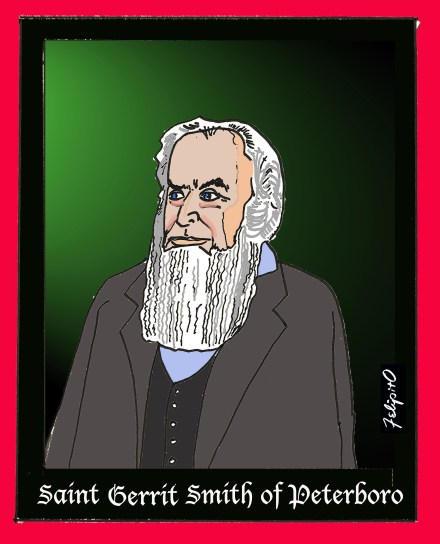
There were only a handful of African Americans in Madison County N.Y. where I grew up. Some of these persons of color may have been descended from slaves who settled in Peterboro, an outpost of the Underground Railroad operated by the abolitionist Gerrit Smith. Looking back, I am appalled by memories of how the white majority – including me – treated them. Black children were taunted with the ‘N’ word on the playground, or slapped by white teachers in school, and – in one memorable incident – subjected to an incredibly obtuse but well meaning teacher who used the ‘N’ word in a rhyme to select the next person to read from a text book: “eeney, meeney, miney mo …”

I can’t begin to imagine how uncomfortable we made children of color back then. And most of us oppressors would have insisted that we didn’t have a racist bone in our bodies.

I haven’t seen Tony Campolo for years, but judging from his press pictures, he’s the least changed of my Eastern Baptist College professors from the sixties.

Tony was known for making startling claims with ex cathedra authority, which was challenging in the day when you couldn’t vet his claims through Google, and he tried out some of his more famous lines on us: “Last night when you were sleeping, 30,000 kids went to bed hungry and you don’t give a shit about it. Worse, you’re more upset that I said shit than the fact that 30,000 kids are hungry.”

Once Tony said something, it was hard to forget it. Among the Tonyisms I remember:

“If you grew up in the United States, you are a racist.”

I first heard Tony say that in Soc 200 in 1968, and the notion surprised me. But as the years pass, I find fewer reasons to doubt it. I’m a racist, you’re a racist, all God’s children who grew up in the race-obsessed cauldron of American culture are racist.

Now, that’s not necessarily a peculiar aberration. Racism is a sin, and we all know we are sinners who fall short of the glory of God. To deny our racism is to deny we are sinners.

The next time you hear someone say, “I’m color-blind,” or, “I don’t have a racist bone in my body,” smile ironically and walk away.

Of course, there are also people who are not ashamed of their racism and flaunt it on Twitter and Facebook. Certainly people in the U.S. (and elsewhere) who openly tweet their hatred are to be feared.

Particularly scary are those white folks who complain they have lost their freedom and status because a black man has twice been elected president, and because the president declares a commitment to universal healthcare, economic justice, immigration reform, and gun control.

Those nervous white folks have difficulty seeing that they haven’t lost any freedoms because freedom is being offered to more people. In fact, the more races, ages, ethnic groups, and sexual orientations that are empowered in the U.S. system, the more freedom everyone has.

Be that as it may, the most dangerous people in America are not those who tweet their hatred openly.

The big problem is people who don’t believe they are racists.

That problem group may include you, me, Obama, Bill O’Reilly, Fox News, Rush Limbaugh, Al Sharpton, or anyone else who is supposed to have a dispensation from the sin of racism.

But racism is the Boogey Man that haunts us all. He is the great Satan who lives in every heart, and forces us to cringe in the presence of others we don’t understand or don’t like. This reality was understood by spiritual savants and mystics since the beginning of time. That is why Hillel, Buddha, Mohammed, Jesus, and others urged us to open our minds and hearts and treat everyone the way we would want to be treated. Because we naturally distrust our neighbor, the Creator added a non-negotiable caveat to our existence: Love Thy Neighbor.

Loving our neighbors and loving our enemies is the only defense against the Boogey Man.

Repeating the gospel of Campolo: “You can’t grow up in the United States without being a racist.”

But there is no defense against the Boogey Man if we keep looking for him in the camps of persons we neither like nor trust.

The Boogey Man is far closer and far more dangerous than that. When we examine our own hearts, the unpleasant reality becomes all too clear.

We have met the Boogey Man. And he is us.

Posted in Uncategorized | 1 Comment

Harold Wilke and the ADA

haroldwilkepicsBy Philip E. Jenks

July 28, 2015 – Harold Wilke stared thoughtfully into his coffee cup and swirled the dark liquid in a gentle arc.

It was the 1980s, and we were sitting together at the head table of an ecumenical banquet, unusual for me but not for him. I was asking him for some biographical details so I could introduce him to the group.

Wilke, trim and distinguished in a dark suit and clerical collar, betrayed his puckish sense of humor. He raised the cup to his lips and smiled. “Tell them how I get dressed in the morning,” he said. “People always want to know.”

“How does that work?” I asked.

He put the cup on the table and leaned toward me with a conspiratorial grin. “My trousers, shirt, and jacket are sewn together into a single garment,” he said. “I lay them flat on the floor and slither into them like a snake.”

His grin broadened and his eyebrows danced like small centipedes. I didn’t mention Harold’s sartorial tactics in my introduction, but I laughed. One thing everyone remembers about Harold, who died in March 2003, is that he had a knack of making people around him feel comfortable.

He knew most people don’t have a social plan for engaging an armless man, and polite people may feel awkward around a person who uses his left foot to write, eat, and swirl his coffee, all with graceful motions. But by the time I had dined with him for fifteen minutes, his unaffected manner and warm conversation had diverted my attention from his uncommon style of eating.

Harold H. Wilke, a United Church of Christ minister, was born without arms on a farm in Washington, Mo, in 1915. In rural America prior to World War I, his disability was considered freakish and his first test in life was to avoid being shunted aside to a dark bedroom or soulless institution.

Without arms, he naturally used his feet to grasp food and other items. As he grew to adulthood, he could stretch his left foot to his head to scratch his nose, wash his hair, feed himself, and hold a pen. His foot writing was elegantly legible.

All of this he accomplished on his own. There were no social programs in pre-World War II America to assist him. His local elementary school in Missouri thought he would be a distraction to the other children so they told him not to come. According to Fred Pelka, a historian of the disabilities rights movement, Harold was forced to walk miles each day to another school.

He faced similar discrimination in college where he was forced to eat apart from his fellow students in the kitchen. In later life, Wilke rarely talked little about being a target of adolescent taunting when he placed a fork between his toes to eat, but it must have been intense. Sadly, the disdain never entirely disappeared. In the mid-1980s, a staff supervisor summarily rejected my recommendation of Harold as a keynote speaker for a Baptist banquet supporting Christian education. “I can’t imagine the boss sitting with someone who eats with his feet,” she said.

Wilke was ordained in 1939 by the Evangelical and Reformed Church, a conservative branch of what later became the United Church of Christ. He attended Eden Theological Seminary in St. Louis and Union Theological Seminary in New York, where he was a student of Paul Tillich and Reinhold Niebuhr.

I remember watching Harold preach as he stood erect behind a pulpit dressed in a black robe and clerical collar. His homiletical style was understated but engaging and his eyes scanned the room to connect with each member of the congregation. He would stress certain points by tossing his head in the manner of FDR, the paraplegic president whose hands were locked on the podium with white-knuckled ferocity to keep from falling.

“When I’m wearing a robe, people don’t notice I don’t have arms,” he’d say, smiling. “But some people tell me, ‘I see you’re not one of those preachers who pounds the pulpit.’”

Harold Wilke was an early advocate for the rights of disabled people, both in the church and in government. Elaine Woo, writing his obit in the Los Angeles Times, quoted Hugh Gallagher, a polio victim who drafted early legislation supporting the rights of disabled people:

“(Harold) was recognized by disabled people across the country as a leader and innovator — one of the first of the people to believe in disability rights as a movement. We’d all been disabled for years, but in a medical context: We were sick people who never got well. The disability rights model is that we are oppressed people who were denied our civil rights. Harold was instrumental in developing this concept, which is the key to the whole disability rights movement.”

Americans With Disabilities Act

Harold was also instrumental in the passage of the Americans With Disabilities Act (ADA), signed by President George H.W. Bush 25 years ago this month.

The act was born in the gone-but-not-forgotten era of political bi-partisanship. Poppy Bush was experimenting with “kindler, gentler conservatism,” and not even Strom Thurmond was cold-hearted enough to ignore persons who reminded him of wheel-chair bound baseball hero Roy Campanella or blind and deaf Helen Keller, both adored by voters.

Today, two realities stand out about the ADA.

One, nearly all Americans benefit from the act, or will when the ravages of age and disease catch up with them.

And two, it could not pass in the partisan morass that paralyzes Congress today – an analysis affirmed by former Senator Bob Dole, a disabled veteran who was a sponsor of the bill.

It’s that latter point that makes me wish great leaders like Harold Wilke still walked among us.

The Americans With Disabilities Act requires employers to provide “reasonable accommodations” to employees with disabilities, and obliged businesses to make all public places accessible to everyone.

It is the ADA that requires mechanical lifts on buses, curbside ramps on street corners, ramps bypassing steep steps, and other accommodations for wheel chairs. Telephones, televisions, computers, and other electronic media are now designed to assist persons unable to see or hear their messages. Virtually none of these things existed a quarter century ago, and there was widespread criticism that businesses would be bankrupted by the ADA’s requirements. Today, all of these improvements are taken for granted.

A list of conditions considered disabilities embraces vast numbers of Americans: deafness, blindness, an intellectual disability (formerly termed mental retardation), partially or completely missing limbs or mobility impairments requiring the use of a wheelchair, autism, cancer, cerebral palsy, diabetes, epilepsy, Human Immunodeficiency Virus (HIV) infection, multiple sclerosis, muscular dystrophy, major depressive disorder, bipolar disorder, post-traumatic stress disorder, obsessive compulsive disorder, and schizophrenia.

My family – and certainly yours – has members in more than one category of disability. My mother was legally blind until she received cornea transplants in the 1960s. My father, a World War II veteran of the bloody Buna campaign in Papua New Guinea, showed signs of post-traumatic stress disorder. Cousin Donny had Down Syndrome. Cousin Grace lived her life in a wheel chair.

Closest to home, daughter Katie, 28, is autistic. I can’t imagine what life would have been like for Katie and our family were it not for the Americans With Disabilities Act and other government services that were made possible by the ADA.

In the same way, I can’t imagine what our life would have been like without the advocacy of Harold Wilke and others who helped the public understand that persons with disabilities have unalienable rights that the government is bound to recognize, and who helped push the ADA through Congress.

Harold, dressed in a crisp dark suit, stood directly behind President George H. W. Bush when he signed the Americans With Disabilities Act on July 26, 1990. When the president turned to give Harold a souvenir pen, Harold slipped his left foot out of his loafer and grasped the pen with his toes. The president beamed and the crowd applauded.

Twenty-five years later, we continue to applaud the act and all it has met to millions of Americans. And we continue to thank God for Harold Wilke, whose birth defect first created the illusion God had played a terrible joke on him.

But God had actually given him gifts beyond measure, and millions today still benefit from his life among us.

For more about Harold Wilke, read his memoir, Angels on my Shoulders and Muses at My Side (Abingdon Press, 1999).

Posted in Uncategorized | Leave a comment

Stars and Bars and Scars

starsandscarsSouthern heritage has been on the hot seat recently.

In South Carolina, politicians are forced to recognize the Confederate flag for what it is, an icon of white supremacy and racism.

And in the literary world, fans of Harper Lee’s To Kill a Mockingbird are scandalized that Lee now reveals the heroic Atticus Finch as a racist segregationist.

The New York Times reports:

“Shockingly, in Ms. Lee’s long-awaited novel, Go Set a Watchman, Atticus is a racist who once attended a Klan meeting, who says things like ‘The Negroes down here are still in their childhood as a people.’ Or asks his daughter: ‘Do you want Negroes by the carload in our schools and churches and theaters? Do you want them in our world?’”

We all have lawyer acquaintances who were inspired by the earlier Atticus to become attorneys. My heart breaks for them.

At the same time, I wonder if the Atticus of Watchman, which takes place in the 1950s civil rights era, is all that different from millions of righteous white southerners of the era. I have known quite a few decent, caring people who thought like Atticus.

In the early 1960s, one of my mentors when I was an Air Force chaplain’s assistant at RAF Station Bentwaters/Woodbridge in England was a Southern Baptist chaplain from Arlington, Va. He was soft-spoken and kind. He treated everyone with respect, regardless of race, age, or gender (or, I might add, their military rank). He stood up for African American airmen when they were mistreated in the barracks. He was horrified by the mistreatment of blacks in the south.

I regarded him as a model of Christian decency and propriety. And yet, in retrospect, I’m sure that in 1967, he thought a lot like the latter day Atticus. Like most of us in this era (of course I include myself), it was difficult for even the most righteous to gauge the true depth of our racism. Racism was so deeply entrenched in our culture, north and south, that we lost the ability to recognize it for what it is.

The armed forces of the United States were integrated in 1948, and by the mid-sixties blacks and whites lived in the same barracks, reported to the same duty sections, ate in the same mess hall, and worshipped side by side in the same chapel.

But it wasn’t easy. Many of my white friends would wait until a black airman had left the room and launch a vicious verbal attack. “Ain’t that just like a lazy, stupid n—–?” they’d complain, expecting I would agree with them. I didn’t have the courage to protest, and I told myself that if things got out of hand, the chaplain would intervene. *

The chaplain and his family rotated back to the states six months before I did, and when my tour was up I arranged to visit him at his new station, Shaw Air Force Base in Sumter, S.C.

I stopped by to see the chaplain and his family in February 1968 before reporting to my new assignment at McConnell Air Force Base, Kans. The first thing the chaplain did was take me to Sunday services at a small white Southern Baptist Church near Sumter. The visit was memorable, for me, because the pastor – also white – kept punctuating his sermons with “wise words” from “an old n—– preacher.” He used an exaggerated Joel Chandler Harris accent to complete the effect.

Perhaps he was making the point that wise sayings are not racially exclusive, but I told the chaplain I was shocked to hear the ‘n’ word used from a pulpit.

“Aw, everyone uses it here, both colored people and white people,” he explained. “It doesn’t mean anything.”

The next day, the chaplain and I decided to take a trip from Sumter to Charleston, where a mutual friend Bentwaters/Woodbridge was waiting to take us to lunch. We invited a staff sergeant friend of the chaplain’s to join us and hopped into a cavernous Chevy wagon for the three-hour drive to Charleston.

Even in February, the South Carolina countryside was beautiful and the chaplain and I began telling the sergeant diverting tales of our last assignment in rural England. After about an hour, the car engine began to gasp and the chaplain pulled off the road.

“Out of gas,” he said. We were in the middle of nowhere, a long way between Sumter and Charleston.

“I have an old gas can in the back,” the chaplain said. “When was the last time we passed a gas station?”

“I think there was one back there,” the sergeant said, gesturing down the long road we had just traveled.

The chaplain got out of the car to retrieve the gas can and handed it to me. Military life simplifies many decisions, and the fact that both my companions outranked me made it obvious that I would volunteer to buy the gas.

“Wait here,” I said, stressing the irony. And I took the can to the side of the road and stuck out my thumb.

Even in bucolic South Carolina in the sixties, a hitchhiking stranger was suspicious and several speeding cars ignored my honest white face.

Finally, a beige Lincoln Continental pulled over. The driver was a large, middle-aged white man wearing a crisp blue blazer and a Stetson hat like Harry Truman’s. The man was smoking a Winston cigarette, which was not unusual in South Carolina in 1968.

“Where to, Son?” the man asked, stifling a wheeze.

“Ran out of gas,” I said. “Can you take me to the nearest gas station?”

“Hop in,” he said. The man tossed his Winston out the window and pressed his dashboard lighter against another one.

“We see a lot of GIs in these parts,” he said, although I was in civilian clothes and had not mentioned I was an airman. I sat quietly as he reminisced between drags on his cigarette and raspy wheezes about his own service in Texas during the Second World War.

“Never fired a goddamn shot,” he said.

As his anecdotes unfolded, I noticed a gas station ahead and was a little surprised when he passed it. Trying to keep the conversation going, I told him why I was in South Carolina and where I was headed. He nodded attentively and sped passed a second gas station on the right hand side. I rustled the gas can in my lap to remind him of my mission.

When we surged past a third gas station I pointed it out to him. The man coughed wetly and tossed another cigarette out the window. “Yeh,” he said. “Well, shit, Son, those is n—– garages.”

Obviously, he intended the explanation to suffice. A full cigarette later, he pulled into a gas station that had his approval and I jumped out.

I filled the tank and went back to the road to stick out my thumb. Immediately, a battered pick-up pulled over and I jumped in. The driver was a black man wearing a cloth cap and overalls.

“Thanks for stopping, Sir,” I said. “My car is down the road a few miles.”

The man nodded and the transmission grated loudly as he put the truck in gear. He didn’t say much, but he smiled when we passed the first gas station that I had obviously spurned.

When we passed the second, I shifted uncomfortably in my seat. When we passed the third, I feigned good humor and said, “Almost there.”

“Yes, Sir,” the driver drawled.

When we pulled up to the stranded car, the chaplain and sergeant were engaged in quiet conversation. They didn’t notice the driver of the truck who had delivered their gas to them.

“Let me give you something for your trouble,” I told the driver as I fumbled for my wallet.” “No, Sir,” the driver said, adding inscrutably, “Angels unawares. Angels unawares.” And the truck’s muffler popped loudly as he eased onto the highway.

I told the chaplain and the sergeant what had happened, but they soon lost interest in my account and changed the subject.

It was my first encounter with the Jim Crow south, and it stayed on my mind all my life.

I have also never forgotten the chaplain who met so much to me when I was young and considering what Southern Baptists call “full time Christian service” as a career.

In many ways, he was a perfect embodiment of Jesus, a devoted Christian who tried to love God and to love all his neighbors, regardless of race, as he loved himself.

But, perhaps like Atticus Finch as Harper Lee saw him in his later years, he was so immersed in the racist culture in which he lived that he lost the ability to see it clearly.

This, of course, is not unique to the American South. It’s a condition of growing up in the United States, and it affects us all. And as we watch Atticus develop in the subsequent chapters of Harper Lee’s new novel, I hope we will not be so quick to condemn him with our righteous disappointment.

Atticus is, after all, a mirror image of most of us: a good and righteous person struggling to discover the human truths that are hidden in the dense fog of our upbringing. And who can condemn him for that?

See also http://thelittlescroll.blogspot.com/2009/07/racists-r-us.html

________

* Another figure who made white airman hesitate to express their racism on Bentwaters/Woodbridge was the vice wing commander, Colonel Daniel N. “Chappy” James, a charismatic but physically intimidating giant of a man. James went on to become the first black 4-star general in the Air Force.

Posted in Uncategorized | Leave a comment

Welcome Back, Carter

jcBy Philip E. Jenks

July 10, 2015 – Jimmy Carter, now in his 91st year, has been out of office longer than any millennial has been alive.

That makes him extraneous to the majority of living Americans, and even those who remember his presidency dismiss him as a fleeting peculiarity between Watergate and Reagan.

Yet those of us with long memories suspect Carter’s political setbacks were not only due to factors beyond his control but exacerbated by a press that didn’t always get the story right.

Nicholas Kristof, writing this week in the New York Times, suggests the press owes Carter an apology. Recalling the media’s merciless exaggeration of a non-incident – Carter’s alleged encounter with a wild-eyed rabbit that attacked his rowboat – Kristof writes,

“One of our worst traits in journalism is that when we have a narrative in our minds, we often plug in anecdotes that confirm it. Thus we managed to portray President Gerald Ford, a first-rate athlete, as a klutz. And we used a distraught rabbit to confirm the narrative of Carter as a lightweight cowed by anything that came along.”

Lost in the narrative is the image of Carter as an assertive leader who championed civil rights, pressed for human rights around the world, sought international peace, and always tried to do the right thing.

It was that latter trait, some say, that did him in, not only in the press but also in the darker passages of government.

Miles Copeland, a CIA functionary, complained in a 1990 interview with Robert Parry that “Carter was a Utopian. He believed, honestly, that you must do the right thing and take your chance on the consequences. He told me that. He literally believed that.” Parry later recalled that “Copeland’s deep Southern accent spit out the words with a mixture of amazement and disgust.”

There is a dubious conspiracy theory that the CIA and its media cohorts worked hard to damage Carter’s reputation and assure his defeat in the 1980 election. The theory is interesting but doesn’t give due credit to Ronald Reagan, the best presidential campaigner since Franklin Roosevelt.

There are many reasons Carter lost the election of 1980 (including the one cited by George McGovern to explain his disastrous defeat in 1972: “Lack of votes”).

But it is good to see Carter’s reputation slowly restored by journalists and historians, including Kristof and Randall Balmer, whose astute Redeemer, the Life of Jimmy Carter, places Carter in the venerable American tradition of progressive evangelicalism.

It is that tradition, in fact, that first attracted me to Jimmy Carter.

When he moved into the White House he became the world’s most famous Baptist.

Naturally, ambitious Baptist bureaucrats scrambled to meet him so they could drop his name.

I admit I was among those Baptists who thought it would be great to meet him. At it turned out, my first encounter was a bit of a misadventure.

In 1977 I was 32 years old and editor of The American Baptist magazine, the official organ of American Baptist Churches in the USA. The magazine itself founded in 1803 and billing itself as “the oldest religious periodical with continuous publication in the western hemisphere,” had gravitas. I had no such thing, and I was eager to be seen engaging the president of the United States in Baptist small talk.

That year President Carter signed treaties to turn the Panama Canal over to Panama. Barry Goldwater and Ronald Reagan called upon the Senate to reject the treaties, but John Wayne was for them, and Carter should have known that the Duke trumps a Goldwater and Reagan in any game. But he launched a public relations campaign to win popular support for the treaties, and he invited many maxi- and mini-molders of public opinion to the White House to make his case.

Among the molders were religious journalists who went to the White House to hear the president make his case. A couple hundred journalists came from every religious tradition, and we shuffled respectfully into the East Room of the White House where rows of folding chairs had been placed.

I had never been to the White House and I prepared carefully for the occasion. I bought a new tan suit and new earth shoes that not only squeaked on the shiny floor but also had unusually low heels that kept me off balance. I carried in my side pocket a copy of Input, the newsletter for American Baptist professional leaders, which published a statement of American Baptist support for the treaties. I wanted to give the statement to the president so I shrewdly sat a few chairs from Jim Wall, editor of The Christian Century. Jim, a Georgian, was known to be a friend of Carter’s and I calculated the president would probably notice him in the chairs.

At the appointed hour, a shrill voice called out, “Ladies and Gentlemen the president of the United States.” We stood, and Jimmy Carter strode purposefully into the room. He was dressed in a light-gray plaid double knit suit and he flashed his familiar smile as he headed for the podium. Ambassador Ellsworth Bunker, who was charged with giving the treaties diplomatic heft, and National Security Advisor Zbigniew Brzezinski, flanked him. Bunker, tall and glum, and Brzezinski, with his trademark cowlick, seemed resigned and weary, as if their silent support had been required for more than one presidential briefing.

Carter spoke briefly on the moral obligation and legal logic of the treaties, and stepped away from the podium. The crowd stood at once and we began pressing toward the president, hoping to catch his eye. Jimmy Carter is warm and nearly charismatic when he is pressing the flesh, an attribute never captured on television. He grabbed hands and spoke easily to African American pastors, lavishly dressed bishops, bearded rabbis in black suits, and Baptist editors in white belts and double knit pants. I heard Carter say, “Hi, Jim,” to Wall as I squeezed among the clerics.

I worked my way behind the president’s back as he shook hands with a purple-vested bishop and I reached into my pocket for the copy of Input. Behind me was my friend William Dudde, a Lutheran writer, and behind Bill was an unknown admirer pushing eagerly forward. The admirer thrust himself against Bill, who lost his balance and pushed heavily against me. I lost my footing in my new earth shoes and fell rudely against the president’s back. I smelled his soap and hairspray.

Both Carter and the Secret Service must have been inured to unplanned jostling in crowds, so I was not – as I briefly expected – wrestled to the ground by security agents.

Instead, Carter turned and scowled at me with his clear blue eyes, the “fishy-eyed stare” he reportedly gave to people who annoyed him.

He started to turn away again and I forgot all about the copy of Input. “Mr. President,” I said hurriedly, “American Baptists are for you.”

He smiled slightly and took my hand.

“Thanks,” he said. “I need all the help I can get.”

Weeks later, the White House sent a wide-angle black and white photograph to all the participants. It shows President Carter smiling in the midst of the crowd. I am standing a few steps behind Carter, also smiling and probably rehearsing a speech I wanted to give the president about Baptist support for the treaties.

Providentially, the picture was taken before I could get any closer. I lost it years ago, and it’s just as well.

Happily, I had several more brief encounters with Jimmy Carter over the years which ended without mishap. Each time I was impressed by his graciousness and easy manner. He is never an intimidating presence, despite his international fame and the awesome power he once held. I once attended a meeting on health care sponsored by the Carter Center and was filling my plate at a buffet offering fruit, veggies, and granola.

“Statistics show the Mormons live the longest because they don’t use caffeine and eat healthy food like this,” said someone standing just outside my line of sight. I turned and recognized the former president, also filling his plate.

“This is very healthy,” I replied redundantly. A Baptist colleague who thought the buffet was sadly lacking whispered loudly enough for the president to hear it, “I want steak. I’d rather live with Jesus than in Salt Lake City.”

Jimmy Carter is now 90, and I hope he lives long enough to see more pundits and journalists acknowledge the wisdom, courage, and strength he brought to the White House and in all the years before and after his presidency.

He may have been, after all, the only president in recent memory who genuinely believed “that you must do the right thing and take your chance on the consequences.”

That alone should qualify him for a statue somewhere. And I would like to think more than one candidate in the forthcoming election might honor the model offered by the much-disparaged 39th president of the United States.

But I think it’s more likely that the candidates will adopt more cynical approaches to their pursuit of power, and historians will note that the president who always tried to do the right thing remains unique in his time and, sadly, in all time.

See also: https://cakesandale.org/2014/03/27/jimmy-carter/

Posted in Uncategorized | 1 Comment

Stan Freberg. Cue the Cherry.

Stan_Freberg_2009This morning I’m celebrating the life and mourning the passing of Stan Freberg, a closet Baptist and certifiable communications genius.

His LP album, “Stan Freberg Presents the United States of America,” was widely regarded as the best comedic audio recording in the English language. I can still recite long passages from it, including Freberg’s send-up of patronizing liberals as the pilgrims sing, “Take an Indian to Lunch.”

Freberg would have left fictional Mad Man Don Draper in his dust. In the sixties and seventies he generated some of the most effective commercials on television, including the incomparable “Hi, Ho Pizza Roll,” which elevated a mundane snack to a sublime experience.

In the seventies, Freberg was a powerful influence on my colleagues and me in the American Baptist Division of Communication, and we listened with conviction to his minute-long demonstration showing radio stretched the imagination more effectively than television:http://youtu.be/ppZ57EeX6vE

Great bit, Stan. Cue the Cherry.

Posted in Uncategorized | Leave a comment