The Greatest and Smokin’ Joe

joeandmuhammadJune 4, 2016 – The New York Times called Muhammad Ali “a titan of boxing and the twentieth century.”

He had been out of public sight for many years, but his death Friday at 74 was a reminder he was once the most famous person on earth.

Ali’s charisma was such that people would remember their encounters with him all their lives, no matter how fleeting.

I saw him twice, from a distance. Once was in Overbrook, Pa., a fashionable Philadelphia suburb where he once lived. His home was near Eastern Baptist Theological Seminary. The toddling daughter of one of the professors caught Ali’s eye and he would occasionally stop and talk with her father. I was in Overbrook to help that professor pack for a move and was astonished to see Ali drive by in a huge open convertible. Ali recognized the prof and raised his arm in a power salute.

The prof waived back. “That guy’s always doing that,” he said. “I think it means he’s a boxer or something.”

The second time I saw Ali was in at the Valley Forge Music Fair during a performance by Redd Foxx. Somebody handed Foxx a note and he interrupted his blue monologue. “Muhammad Ali is in the audience,” he said. “Ali, the greatest of all time. Stand up, Muhammad.”

On the far side of the round, a silhouetted figure stood and waved. The crowd cheered loudly and Foxx waited until the applause subsided.

“Of course if Joe Frazier was over there,” Foxx said, “I’d be saying, f—k Muhammad Ali.”

I was impressed by how little effort it took Ali to be the star of any space he occupied, even when he was a member of the audience.

For Joe Frazier – a lesser titan of the twentieth century – Ali’s overweening fame was probably more annoying than his left hook. Frazier couldn’t escape the fact that his name was forever linked with Ali’s, and always in a supporting role.

I once made a small contribution to Frazier’s predicament when I interviewed him for the Pottstown Mercury. Frazier had been retired for years in 1994, and he was in Pottstown as a celebrity spokesman for a furniture company. It didn’t make sense to send a sports writer to cover him, so the editor sent me. Like many other journalists, I couldn’t imagine Frazier apart from Ali. Part of my story read:

There was Joe, leaning back and stretching out his legs, happily reminiscing with a small group of admirers.

“I’m always glad to remember,” said the Champ in response to a question about the old days. “I have no bad memories. Some of the guys I remember, and if I remember them I think about them.”

Trim and dressed to the nines in a fashionable gray suit, Frazier ticked off a list of guys he remembered

“Briscoe. Archie Moore. The late, great Jersey Joe Walcott. Joe Louis.

“But Joe,” someone shouted, “aren’t you leaving someone out?”

I was the someone who asked the question.

Frazier snorted as if he were ducking an imaginary left and leaped to his feet. Smiling broadly, he showed he can speak volumes about his old nemesis, Muhammad Ali, without mentioning his name.

The champ stretched his arms stiffly, shifted his weight from foot to foot and feigned a blank expression on his face. He opened and closed his mouth, but no words came out. A couple of shoppers burst out laughing when they realized who he was imitating.

“We got him slowed down now,” exclaimed the champ. “He got the sleeping sickness, what they call it – Parkinson’s?”

Joe flexed a bicep that was still hard as iron. “Feel that,” he invited a fan. “That’s what he got.” …
Using a blue marker, he scribbled his name on color photographs of himself and bantered happily with his admirers.

“Who was the greatest heavyweight of all time?” asked one.

“Well, I’m one of them,” he said, beaming.

Joe Frazier was certainly one of the greats, and he was a kind, generous, and funny man.

But as word came Saturday of Muhammad Ali’s death, it was clear that Smokin’ Joe would always be one of a large cast of characters in the twentieth century that helped Ali earn the title by which he will always be remembered:

The Greatest.

Posted in Uncategorized | Leave a comment

Julie’s Little Secret


The death of Julius LaRosa on May 12 was prominently reported in the New York Times and other media.

Surprisingly so. His fame crested in 1953 and had been ebbing ever since. But the media coverage of his passing showed he was still remembered by millions of baby boomers and their parents.

Twenty-two years ago, LaRosa was one of the few celebrity interviews I did as a reporter for the Pottstown Mercury. I was the oldest reporter on the staff, and when Editor Walt Herring shouted, “Anyone here ever hear of Julius LaRosa?” I was the first to raise my hand.

LaRosa was appearing at the grand opening of Boscov’s, a local department store, and Herring thought his presence was worth covering.

As it turned out, I spoke too soon. I had also heard of Anna Maria Alberghetti, who was also appearing at Boscov’s. I had a crush on her in the 1950s, but – despite my eager pleas – Walt assigned a younger reporter to cover her.

Be that as it may, LaRosa was a charmer, and I realized my late mother would have swooned at the chance to meet him. I couldn’t help but admire the way he would grasp an elderly woman’s hand and gaze intently at her. “I can tell you are a wonderful person,” he’d say. “I can see it in your eyes.”

LaRosa was generous with his time when we retired to a backroom for an interview. He crossed his legs and pulled out a packet of metholated cigarettes. “Please don’t mention this,” he said, holding a cigarette in the air. He lit up, inhaled deeply, and the interview commenced.

I kept his little cigarette secret all these years. But if it contributed in any way to his passing, perhaps now is time to let it be known.

Here’s the story I wrote:

LaRosa takes crowd back to the 1950s

By Philip E. Jenks
Mercury Staff Writer

julie2

NORTH COVENTRY, October 12, 1994 – It will have been 41 years next week but the memory still takes the crinkle out of Julius LaRosa’s smile.

Mention the name Arthur Godfrey, and the grin tightens across his teeth.

“He made the foolish statement about my having lost my humility,” LaRosa said Tuesday in his resonant baritone. “My humility is between me and God—not between me and another man.”

You have to be nearing 50 to know what LaRosa is talking about, but the event was – after the Army-McCarthy hearings – one of the most dramatic confrontations of television’s infancy.

LaRosa, a handsome singer from Brooklyn and a regular on Godfrey’s popular TV program, was nationally famous at 23. He became even more celebrated on October 19, 1953, when Godfrey fired him on the air.

LaRosa, 64, has had a long career as a cabaret and nightclub singer since then, but the Godfrey incident was a defining moment. It dogs him wherever he goes – even to Bocov’s this week where he is doing free shows at 2 and 7 p.m. through Saturday.

He defuses questions by mentioning the incident himself.

“By the way,” he told his audience between songs Tuesday, “it pleases me to tell you that Mr. Godfrey and I are on very good terms.”

The crowd, realizing Godfrey has been dead since 1983, laughed.

“And I have to go to confession every time I say that,” LaRosa added, driving the point home.

Backstage, LaRosa was pleased to report his side of the incident. Relaxing in a gray sweater and dark slacks, he sank into a well-padded Boscov’s easy chair following his afternoon performance.

“I was getting 5,000 to 6,000 letters a day. Mr. Godfrey was getting 4,000 to 5,000,” he said, gesturing for emphasis.

“I was dating one of the girls on the show and it was his unwritten law that you don’t fraternize with the staff.”

But the final straw came when LaRosa declared his independence from Godfrey by hiring his own agent.

“He had every right to fire me,” LaRosa said. “His mistake was the manner in which he did it.”

The incident made national headlines for weeks, and some of LaRosa’s fans took it personally.

“Just yesterday a woman came up to me and said, ‘My son was born the day you were fired,’” he said, marveling. “She said, ‘The first two things I remember hearing are, “It’s a boy” and “Arthur fired Julius!”’”

LaRosa is appearing before standing-room-only crowds in Boscov’s auditorium this week. Most of his Pottstown area fans are women in their mid-60s who like to sing along when he croons the old standards.

LaRosa, who stands 5 feet, 5 inches tall, seemed taller on Godfrey’s program – probably because his robust voice belts out the songs with authority and style.

Dressed in a neatly tailored sports jacket when he is on stage, LaRosa beams a high-wattage charm. He puts so much energy into his smile that his brown eyes seem to be swallowed up by hooded slits beneath his dark brows.

And after four decades in the business, he knows how to work a crowd.

Stepping off the 2 ½ foot high stage, he grunted as his feet touched the floor. “It used to be a lot easier than this,” he said. A woman giggled and he turned the full glare of his smile on her.

“That’s not funny,” he scolded teasingly.

“I know how you feel,” another woman told him.

Microphone in hand, LaRosa crooned his way up the aisle, gazing into women’s eyes and reaching out to take their hands.

“He’s coming, Myrtle,” a woman on the second row shouted, nudging a friend.

LaRosa’s repertoire Tuesday included, “I Love You More Today Than Yesterday,” “The Days of Wine and Roses,” “I’m Glad I’m Not Young Any More,” “There is Nothing Like a Dame,” and “Bye-Bye, Blues.”

He also delivered a rich interpretation of “As Time Goes By,” which he said was the third-most popular song ever written.

LaRosa, who lives near the Tappan Zee Bridge north of New York City, performs in studios, ballparks, bars, fairs, nightclubs, high school auditoriums, cruise ship, theaters, arenas, and tents.

But LaRosa acknowledged Tuesday that his success depends on the support of a graying generation. “The young people – they’ve never heard of me,” he said.

His aging fans, however, will never forget him.

“It was the birth of television,” he said. “It reached its peak with the incident. LaRosa and Godfrey were on the front pages in New York for 15 days in a row. The impact of what happened to me only proves the impact and power of television.”

Posted in Uncategorized | Leave a comment

GI’s, Gypsies, and Hitler’s House

nichtcolor

Pile the bodies high at Austerlitz and Waterloo. 
Shovel them under and let me work–
 I am the grass; I cover all.
And pile them high at Ypres and Verdun.
Shovel them under and let me work.
Two years, ten years, and the passengers ask the conductor:
What place is this? 
Where are we now?
I am the grass.
Let me work. 

Carl Sandburg was almost right. But 20 years after the Second World War, the grass had not quite finished with Germany.

In 1966, Berchtesgaden, though a picturesque alpine village in Bavaria, was a classic case of dissociative personality disorder.

Disney studios could have designed the charming chalets with their overhanging eaves, and women wore their blond hair in braids atop their heads. Men wore feathers in their felt hats and dressed in lederhosen with wool knee socks and thick-soled shoes.

Americans invaded Berchtesgaden in 1945 without firing a shot, so two decades later the villagers showed little animosity to uniformed Yanks.

Still, interactions were awkward because of an unavoidable truth: every Berchtesgaden resident over 40 was an ex-Nazi.

“One had to be a National Socialist in order to live and work here,” a round-faced German waiter told me with a shrug. “It didn’t mean anything.”

But it was a hard to ignore. Adolf Hitler was a virtual resident of the village after he took possession of the Kehlsteinhaus, a mountaintop mansion built for his 50th birthday in 1939 by his aide Martin Borman. The building atop the Obersalzberg was soon dubbed the Eagle’s Nest.

When I visited Berchtesgaden in Spring 1966 for a U.S. armed forces religious retreat, unscathed reminders of the Nazi past dominated the village. Elegant stone barracks for SS Officers were converted to luxurious billets for U.S. military visitors. Each building still bore a bas relief carving of the SS eagle, but where the fierce talons had once grasped a rigid swastika, the Nazi emblem had been chipped away and replaced with the letters, “USA.”

I don’t know who first thought of converting this enclave of Nazism into a religious retreat center for U.S. armed forces families. Whoever it was had a fine sense of irony or perhaps just a great sense of humor, which describes none of the generals I knew.

Each spring and summer, various church denominations held weeklong hymn-sings in buildings that once resounded with the Horst Wessel song. The Baptist retreat (mostly Southern Baptist – the more liberal American Baptists were regarded with paranoid suspicion) was held each April when the snows began to melt and the Berchtesgaden valley turned luscious and green again.

I traveled to Berchtesgaden as the assistant of an Air Force chaplain, who checked into the officers’ side of the General Walker Hotel, a former SS barrack renamed for General Walton Walker who had been killed in Korea. The chaplain’s room was spacious and exquisitely appointed. My room, on the enlisted side of the quad, had six rows of bunk beds and 11 occupants.

My room mates seemed like nice guys, but when they stuffed copies of The Four Spiritual Laws in my pillow and invited me to a workshop on Christian witnessing, I decided I wasn’t going to spend a lot of time in my room – or in religious services, either. I stepped outside and lit a cigarette.

(NOTE: In 1966 we didn’t know smoking was stupid and deadly. 

I took a long drag off my Pall Mall and watched people – Germans and Americans – as they mingled in the courtyard. A young man about my age, dressed in light green jacket and khaki jeans, sidled up.

“Army?” he asked. The branch of service in which one served was much like a nationality, and introduction etiquette required one to declare it before revealing anything else.

“No,” I said. “Air Force.”

“Cigarette?” It was a request. I handed him the crinkly red pack.

“Thanks.” He quickly lit up and loudly inhaled.

“I’m Harry,” he said. “Army. Chaplain’s assistant.”

“Yeah?” I said. “Me, too.”

“Your boss here?”

“Yeah.”

“Mine, too. What a drag.”

Harry had a crew cut and horned rimmed glasses and I remember thinking he was pretty goofy looking. On reflection, most passersby probably thought we were twins.

We smoked in silence for a minute, carefully striking macho poses before we crushed the butts under our shoes.

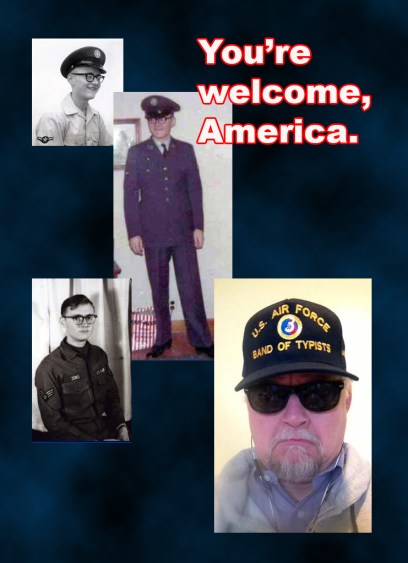
“Thanks for the fag,” Harry said. In 1966, a fag was a cigarette, at least in sections of Europe influenced by the British culture of the Mersey Beat.“You’re welcome,” I said.

We looked around and casually studied our surroundings while we evaluated whether we could stand to be with each other for any period of time.

“Yeah,” I repeated. “Any time.”

“Know what I want to do?” Harry asked suddenly. “I want to climb up – there – and see what’s what.”

He pointed to the top of Obersalzberg, to an expansive gray house barely visible in the distance.

“That’s the Eagle’s Nest,” Harry said. “Fuckin’ Hitler’s place.”

“Yeah,” I said. Of course I had heard of it. It was the main thing I wanted to see in Berchtesgaden.

“That’s where he declared World War II.”

“Yeah,” I said. I knew that wasn’t exactly true.

“Maybe he’s still there. No one has seen him.”

I felt a surge of excitement. When you’re 20, you tend to believe anything another 20-year-old tells you and this was too good to ignore.

“Want to see?” Harry asked?

“Hell, yeah.” At that point, the spring sun was quickly setting behind the hills so we agreed to meet back at the same place after morning chow.

The next day Harry and I loaded up on an enormous breakfast of hotcakes, eggs, fried potatoes, and sausage, followed by several cups of coffee and a couple cigarettes. It’s frightening what you can do to your body when you’re 20.

It did look like a long hike. The Eagle’s Nest is 6,017 feet above sea level. You can climb straight up if you’re young and energetic, or you can walk up the 3.9-mile road that was built for Hitler’s staff cars. The road climbs 2,300 feet through five tunnels and one hairpin curve.

Harry and I chose to walk straight up the mountain, at least until we pooped out and had to take the road. We walked through thick forests of evergreen trees that reminded me of the Adirondacks at home.

“Is this the Black Forest?” Harry asked.

“I dunno. Where’s the Black Forest?”

Harry lit a cigarette and thought carefully. “This is the Black Forest,” he announced confidently.

“Yeah,” I said. Actually, the Black Forest is in Southwest Germany, in Baden-Wurttemburg. But I enjoyed thinking I was in the Black Forest, and used to tell people I had been there.

We climbed for about an hour until we came across the rusted hull of an old military tank. I don’t know what kind of tank, or if it was German or American. Sturdy trees that would have limited its maneuverability surrounded it. Perhaps the Germans had placed it there as part of a defensive perimeter around the Eagle’s Nest.

“This is where Patton came,” Harry said authoritatively. “This is one of his tanks.”

“Right,” I said. We examined the tank carefully and climbed on it until our pants were reddened with rust. There was no insignia that we could see, so I decided it was one of Patton’s. Why Patton would have left it here in the woods was a mystery, but not one I worried much about. Every thing generals do is a mystery.

We climbed several more yards until we reached the road that winds to the Eagle’s Nest and decided to follow it to the top. It started snowing heavily and Harry and I wished we had worn heavier jackets. The snow accumulated around our feet, but as we followed the road out of the trees we could see the village of Berchtesgaden below us, bathed in sunlight and greenness and spring flowers.

“Shit,” Harry said, awed.

“Shit,” I said. It was a poetic moment.

It was close to noon by the time we reached the base of the Eagle’s Nest. The house itself was still 406 feet above us, but we found the entrance to a long tunnel that led to the elevator that went up to the house.

The wind blew icy snowflakes against our cheeks as we paused to evaluate our accomplishment. We looked around. The place was deserted.

“I kind of figured there’d be a caretaker or something,” I said. In later years, the Eagle’s Nest would become a popular tourist site. But in the early spring of 1966, it appeared abandoned.

Harry shrugged. “Go in?” he asked, gesturing to the darkness in the tunnel.

“Can’t come this far for nothing,” I said.

We shuffled into the tunnel and waited until our eyes got used to the dark. We walked slowly until we got to an elevator, which was unexpectedly modern with a polished brass door and button.

Harry grinned mischievously and pointed his finger at the button.

“Me or thee?” he asked.

Decisively, I reached out and pushed it.

Nothing happened.

I pushed it again. Then Harry pushed it. We thought we could hear the hum of gears and pulleys, but it might have been the sound of air in the tunnel.

“Hel-looo?” Harry sang. “How do you say that in German?”

Auf wederschoen?” I sang.

I pushed the button again.

“Maybe there’s another …” Harry started to say, but a gigantic figure suddenly appeared in the darkness behind us.

Nicht, nicht, nicht!” the figure growled.

Harry and I jumped, but we did not cry out. The apparition was only a man, but a big man, just under six-feet-tall, and dressed in a green Bavarian hat and leather lederhosen.

Harry and I wheezed in the man’s face and tried to charm him with toothy grins.

Guten tag,” I ventured, but the man’s face was turning red. He put his left hand on the elevator button and repeated his admonition. “Nicht! Nicht! Nicht.” With his right hand he shook his finger in our faces.

I smiled as broadly as I could, remembering how Davy Crockett grinned a b’ar out of a tree. Harry was also smiling stupidly, and nodding his head, mumbling, “ja, ja, ja …” We turned and retreated quickly from the tunnel.

It had stopped snowing when we got outside, and we stopped to listen to the alarming thumping of our hearts. The slush on the ground stuck to our shoes and made it difficult to retain our balance. Harry started to lose his footing and I grabbed his arm. We steadied ourselves against the tunnel entrance. I reached into my jacket pocket for a package of Pall Malls and started to offer one to Harry, but he was staring at something behind me.

It was a little old man, dressed in an old gray military coat. The coat was frayed but the man’s boots were recently polished. He had a scarf wrapped around his face, and his gray eyes were rheumy and showed little interest in the two young Americans in front of him.

Guten tag,” I said. I held the cigarette pack out to him, but the old man only looked at me suspiciously. All three of us had been surprised by the encounter so we stared at each other for several seconds before Harry turned away.

We headed down the mountain.

We got as far as the place in the road where we could view the sunlit village below.

“Long way down,” Harry said.

“Yeah.”

“We’re going to miss chow.”

“Damn. Let’s step it up then.”

“Can’t,” Harry said. I sprained my back. I’ll never make it.”

“C’mon,” I said. “When you walk up a mountain, you gotta walk down the same distance so your muscles will readjust.” I have no idea where I heard that.

As we caught our breath we could hear a vehicle on the road above us. Harry smiled.

“If it’s not that big joker (not the word he used) in the short pants, let’s hitch a ride,” he said.

“We don’t know where he’s going.”

“He’s going down hill,” Harry said. “That’s all we need.”

In less than a minute the vehicle appeared above us and Harry and I stuck our thumbs out. It was a red truck, pre-war vintage, with a large red wooden cabin affixed to the chassis. The cabin had elaborate designs and carvings on it and I knew it was a Gypsy wagon. When the driver saw us he slammed on the breaks and the truck fishtailed alarmingly in the slush before it came to a halt.

The driver, a middle-aged man with graying chin stubble and a large black moustache, leaned out.

“Americans?” he said.

“Can you give us a lift?” I asked.

Ja, Ja. General Walker hotel?”

Harry and I smiled. “Yes, Sir.”

“Ten marks,” the driver said.

All I had in my pockets were a few wrinkled British pounds, but Harry had the German currency. He handed a wad of bills to the driver, who pointed to the door on the side of the cabin. We jumped in.

Inside, several people were sitting on wooden benches that had been built into each side of the cabin. Two women, one about 50, the other younger, looked at us without much interest. An old man nodded to us. Under the bench, two small children with huge black eyes stared curiously at us.

“Hi, I …”

I started to introduce us when the truck lurched into gear and we were thrown off balance. Harry and I both went down, but the unfortunate Harry had inadvertently grabbed the breast of the younger woman, who started hitting him with a small cloth bag. The old man started laughing and I seized one of the bench posts to keep from sliding out the truck. We could hear slush slapping the undercarriage as the truck picked up speed. I could feel it sliding from one side of the road to the other. When we got to the hairpin turn, I am sure the truck was riding on two wheels, and when it straightened out again it lurched sickeningly from left to right.

“This is how I die,” I told myself calmly.

I thought of my poor mother. Every other gold star mother in 1965 got a nice letter from President Johnson, “Dear Mrs. Jones, I want you to know your son died a hero in the service of his country and you can be very proud.” I wondered who would write the letter to my mom: “Dear Mrs. Jenks, your son died in a wagon full of gypsies after he tried to break into Hitler’s house.”

But soon the truck stopped, inexplicably but safely, in front of the General Walker hotel. Shaking, Harry and I got out. We started to thank the driver, but he had already skidded away. We watched thoughtfully until the truck disappeared behind some brightly painted chalets.

I offered Harry a cigarette.

“That was interesting,” I said.

“Interesting!” Harry replied. “Are you kidding? That was effing amazing.”

“I know, I thought we were goners.”

“What – the truck? Naw, man. The old guy at the top of the mountain!”

I had assumed he was an old German veteran living out his last days.

“What about him?”

Harry took a drag from his cigarette and looked around to make sure we were alone.

“Didn’t you recognize him?” Harry asked. “That was fucking HITler. No shit. Adolf fucking HITler himself.”

I stared at Harry, who was leaning back and forth in a self-congratulatory dance. I decided it would be pointless to comment.

I didn’t see Harry for the rest of the week. In fact, I never saw him again. I never did know his last name, so it would be impossible to trace him in the Internet. And even if I did find him, I couldn’t be sure he would remember me. And if I do find Harry, who knows? Perhaps he’s now governor of a red state.

Harry, if he managed to avoid Vietnam or other hazards of the intervening decades, probably spent the next fifty years telling people Hitler survived the war.

My own recollections of that day are more modest. I survived an icy roller coaster ride down the Obersalzberg with Gypsies after trying to break into Hitler’s house.

And thank God my mother never knew it.

Posted in Uncategorized | Leave a comment

Our Father Who Art in Heaven, Harry Be Thy Name

spiritualpilgrimages72

This is the year members of our family chose England as a venue for spiritual pilgrimage.

In January, Victoria celebrated her 26th birthday with a solo voyage to London and its connections to the Hogwarts School of Witchcraft and Wizardry.

In March, during Holy Week, Martha, Katie, and I will visit places in London that have been holy in our lives and heritage: Westminster Abbey, St. Paul’s Cathedral, and the final resting places of the saints and sinners of England’s religious past.

Some may well wonder if a fascination with Harry Potter compares in any way to the underlying religious dramas of London, including the tumultuous Reformation that swirled around the outsized personality of Great Harry VIII.

But I have difficulty seeing any spiritual and hermeneutical differences in the experiences.

Both Harrys were at the center of a mystical whirlwind of fracases between good and evil that impelled observers to seek the safety of higher powers.

Victoria did visit churches as well as historical sites and museums, but her primary goal was the Warner Brothers Harry Potter Museum and tour.

“It was probably the highlight of my trip,” which included visits to the Tower of London, Westminster Abbey, and Paris, Victoria said recently in an exclusive interview.

“At first I was worried that the visit to the studio might diminish my sense of the magic of Harry Potter,” she said. “But the magic is not so much in the movies – it’s in the books.”

Harry Potter was brought to life in seven novels by British writer J.K. Rowling. Victoria read each one voraciously as soon as it appeared.

Not every critic has been swept away by Harry’s magic. Critic Nicholas Tucker complained that the series contains “melodrama, moral certainty, and agreeable wish fulfillment” which makes it “good but not great literature.” But such comments do not account for Harry’s intense appeal for millions of his followers.

When Martha, Katie, and I visit London and Paris, we plan to immerse ourselves in Holy Week services at St. Paul’s Cathedral, Westminster Abbey, Notre Dame, and St. Peter ad Vincula. Hovering in the background of all these events will be the ghosts and graves of persons who dominate the history books Martha and I read obsessively: Thomas More, Thomas Cromwell, Bishop John Fisher, and Anne Boleyn herself.

Each of these people believed they had special insights into God and faith. They weren’t always right, but their beliefs made them both inspiring and frightening. The great king, a would-be philosopher and Catholic champion in his youth, set out to be a prince of compassion and justice. But a combination of his lust for Anne Boleyn, and his growing realization that his earthly powers had no limits, led to his divorce from Queen Catherine, his repudiation of the Pope, and the making of his deadly enemies list which led to the torture and execution of thousands who disagreed with him. The king made it a capital crime to read the Bible in English, or to deny the physical presence of Christ in Eucharistic bread and wine. In comparison, the world of Harry Potter seems more orderly than the world of Harry VIII. Harry Potter’s evil Lord Voldemort seems relatively benign by comparison.

Obviously, Martha, Katie, and I are not taking a pilgrimage to London to celebrate the chaos triggered by Great Harry’s egocentric and testosteronal theology. What we will be seeking is an opportunity to experience Holy Week – the observance of the crucifixion and resurrection of Jesus – in church settings that survived everything King Henry and his destructive minions tried to do. We hope to participate in the Palm Sunday Procession at St. Paul’s Cathedral, Vespers at Notre Dame, Compline at St. Peter ad Vincula, Maundy Thursday Eucharist and Footwashing at St. Paul’s, Good Friday Devotions at the Cross at Westminster Abbey, and Easter Eucharist at Westminster.

The realities and myths that gave rise to these rites are far too powerful to be derailed by kings. And that is one reason they are so holy to us.

The stories of Holy Week are specifically recorded in Scripture. That would seem to make them categorically different from the stories of Harry Potter, which are entirely products of the imagination of J.K. Rowling. However, as Picasso said, “Anything that can be imagined is real.” And since the Holy Week stories were written decades after they occurred, we can only guess which are true and which were products of an evangelist’s imagination.

But when it comes to experiencing the wonders of God and other higher powers, I would place more importance on what we can imagine than on what we insist to be fact. I once attended a World Council of Churches meeting in Central America and heard Nicaraguan Pentecostals talk about the faith of their ancient indigenous ancestors. Each of them believed in God, they said, because the Holy Spirit was active in their lives. None of them had ever met a Jesuit missionary or heard of Jesus, and each of them developed their own myths to explain the presence of the Great Spirit they never doubted in their lives.

Myths – religious and otherwise – are devices to help human wits comprehend truths so profound they cannot possibly be imagined.

The creation myths, for example, cannot be scientifically proven any more than Harry Potter’s wizardry can be accepted as real. It cannot be empirically demonstrated that the world was created by God in six short days, and populated by a man and woman whose sin introduced evil to Eden. And no one believes Harry and Hogwarts exist outside of our imaginations.

But myths provide a thrilling conveyance for a spiritual exploration of good, evil, and the theoretical confluence of higher powers – whether wizardry or God – that make it all seem real.

For Victoria and millions like her, J.K. Rowling and Harry Potter have established a mystical or even magical connection to other-worldly powers that can only be experienced by the soul.

It is my bias, of course, that the Christian Gospel, with all its  myths and realities, provides the most perfect connection to God.

But I can also understand why, to many of his fans, a pilgrimage to Harry Potter’s London may be as spiritually fulfilling as a Eucharist at the Abbey or Compline at St. Peter ad Vincula.

Posted in Uncategorized | Leave a comment

Is God Messing With Us?

doesgodlaugh72

My Lenten devotional reading this season has been Candice Millard’s Destiny of the Republic: A Tale of Madness, Medicine & the Murder of a President.

It may be difficult for some to see the murder of President James A. Garfield as the stuff of spiritual assuagement, and most in my family think I spend all my time reading about dead white men anyway.

But this particular book is not your average homage to Y chromosomal Caucasians. It was number five on The New York Times bestseller list and was named a best book of the year by The New York Times, Washington Post, Kirkus Reviews, The Kansas City Star, Amazon, and Barnes & Noble. Destiny of the Republic won the Edgar Award for Best Fact Crime, the PEN Center USA award for Research Nonfiction, the One Book-One Lincoln Award, the Ohioana Award, and the Kansas Notable Book Award.

But in addition to being a highly readable true-crime and history narrative, the book also forces readers to confront profound theological questions. Questions like: what is God trying to pull?

History is full of ironies and tragedies that make you wonder if God is even paying attention. The violent removal of Garfield in 1881, four months into his first term, is one of those events.

One of the ironies is that Garfield is generally unknown to us. If he had been allowed to realize his potential, he might have joined Lincoln as one of the towering U.S. leaders of the 19th century.

Even a cursory reading of Garfield’s biography suggests God had prepared him for great things. Born in poverty, Garfield quickly broke out of his bonds. His embrace of both faith and science seems anomalous by 19th century standards. A born again Disciples of Christ minister, he was not only undaunted by Darwin but one of Darwin’s champions. Garfield openly declared that the world has existed “millions of years.” He expressed astonishment “at the ignorance of the masses on these subjects … the battle of evidences must now be fought on the field of the natural sciences.”

Garfield also developed a proof of the Pythagorean theorem, which makes him a rarity among Disciples of Christ ministers and unique among presidents of the United States.

As a student at Hiram College in Ohio, he started out as a janitor to pay his tuition and was hired as a teacher the following year. He specialized in languages, and courted his future wife Lucretia, also a student at Hiram, by teaching her Greek.

When the Civil War began, Garfield rose to the rank of major general before leaving the army to enter Congress as a Republican. (“I have enough generals,” Lincoln reportedly told him. “I need more support in Congress.”)

As a politician, Garfield was an aggressive abolitionist. When the war was over, he insisted that emancipated slaves be given the same rights as other Americans and his public rallies included both black and white admirers.

Garfield’s attitudes toward race were rare in 1881, and there were few others on the scene to echo his views.

“As president he demanded for black men nothing less that what they wanted most desperately for themselves – complete and unconditional equality, born not of regret but respect,” Millard writes. “‘You were not made free merely to be allowed to vote, but in order to enjoy an equality of opportunity in the race of life,’ Garfield had told a delegation of 250 black men just before he was elected president. ‘Permit no man to praise you because you are black, nor wrong you because you are black, Let it be known that you are ready and willing to work out your own material salvation by your own energy, your own worth, your own labor.’”

Garfield never aspired to the presidency (“not even for a minute,” he avowed) but emerged as the Republican nominee as a compromise candidate after 36 ballots. He was stunned by this unexpected turn of events, which he knew would change his life forever.

But his unexpected ascendancy was good news for many because he stood for things the country needed: equal social, political and economic opportunity for all the races, improved relations with the south following a harsh reconstruction, reform of the corrupt civil service spoils system, and universal education be funded by the federal government. Garfield also supported strengthening the Navy and expanding American influence abroad.

It’s hard to look back on James Garfield without thinking of him as God’s chosen prophet to bring truth, justice, and righteousness to the land. (Well, maybe his tendency toward manifest destiny was not on the best side of history, but no prophet is perfect.)

One can imagine Garfield’s Disciples pastor assuring him that God had made him president “for such a time as this” (Esther 4:14)

But if God had great purposes in mind for Garfield, it’s hard to understand what happened next. One of the thousands of office seekers who descended on the White House after Garfield’s inauguration was Charles J. Guiteau. After 135 years, it’s difficult to diagnose Guiteau’s particular form of mental illness except to acknowledge the conclusion of his contemporaries that he was insane.

Guiteau fancied himself a lawyer, though he was never successful at litigation, and a theologian, though his written precepts were lifted wholesale from other sources. He lived for five years in the Oneida Colony in Central New York State, where the members practiced free love. He was singularly unsuccessful in his erotic pursuits as women in the colony quickly dubbed him Charles “Git-Out.”

For most of his life, Guiteau survived by borrowing money he never intended to repay, and by disappearing from boarding houses the night before the rent was due. Despite a life of chronic failure, Guiteau believed God was planning great things for him.

In Destiny, Millard describes an event Guiteau regarded as miraculous. On the night of June 11, 1880, Guiteau was a passenger on the steamship Stonington when it collided with the steamer Narragansett. Nearly 30 persons burned to death or drowned. Guiteau believed his survival was more than good luck.

He “felt certain that he had not been spared, but rather selected – chosen by God for a task of tremendous importance,” Millard writes. “Disappearing into the crowd, he dedicated himself to what he now saw clearly as the divine mission before him.”

At first Guiteau thought his mission was to help Republican candidate Garfield get elected, presuming the grateful president-elect would appoint him counsel to Paris. The deluded Guiteau, who in the days before Secret Service security could strike up conversations with any high ranking politician, confronted and pestered Secretary of State James G. Blaine and Vice President Chester A. Arthur.  He interpreted their distant but polite responses as signs of genuine friendship. Finally Blaine lost his temper with the persistent Guiteau and told him that he would never get the appointment, and he didn’t want to talk with him again.

Shocked and disappointed, Guiteau reached the irrational conclusion that he would please the public and Vice President Arthur if he killed Garfield. On July 2, 1881, he pursued the president to the Baltimore and Potomac Railroad station in Washington and shot the president in the back.

Garfield was not immediately killed by the attack. He lived on for eleven weeks, first rallying then slowly dying in agony. But his presidency ceased to function on the day he was shot.

A notable irony of the assassination attempt was that the shots were not fatal. The bullet missed vital arteries and organs, and if the President had been left alone he could have survived. In the end, the real assassins were germs, and the experienced doctors who didn’t believe in them.

Millard writes, “As the president lay on the train station floor, one of the most germ infested environments imaginable, (Doctor Smith Townsend, the District of Columbia health officer) inserted an unsterilized finger into the wound in his back, causing a small hemorrhage and almost certainly introducing an infection that was far more lethal than Guiteau’s bullet.”

Ha ha. Very funny. What is God up to?

First, God raises up a person of faith and intellect whose ideas and leadership skills far surpass the average people around him.

Second, God places this unusual person in a caldron of distress, a nation torn by post-war and post-reconstruction woes where racism and corruption are rampant.

Third, hopes soar that God has raised up a leader with the strength to subdue the forces of ignorance and lead God’s people along paths of righteousness and justice.

Fourth, God seems to turn away as the leader is struck down by madness and the ignorance of the well-intending people.

And, fifth, James A. Garfield disappears from history, remembered primarily for his heroic frame, his noble brow, and the bizarre circumstances of his premature death.

Garfield’s story is perfect for Lenten meditation. He was a believer who strove to serve God and sought to use God’s gifts to be a harbinger of justice. He was an extraordinary gift to his fellow citizens and to the friends and family who loved him. Why didn’t God take full advantage of this amazing resource? Where was God when Garfield was shot by an insane man and tortured by well-meaning physicians for the last three months of his life?

These are appropriate issues for Lenten reflection because this is, after all, a season of searching, penitence, and sacrifice.

And James Garfield was by no means unique. All one has to do is stay alert on social media to detect the inexplicable suffering of many of God’s children.

Young couples celebrate joyous pregnancies and thank God for the gift of life; but the child is born prematurely or with disabilities and dies within months.

Parents watch with loving fulfillment as their children grow into young adults; but one child dies in a head-on collision, or is lost in a cataclysmic illness.

Adults have reason to thank God for lifelong careers, many of which feel like a calling to service; but the economy collapses, jobs are eliminated, and dismissed workers are unexpectedly idle and bereft.

Persons who never think to thank God for good health discover they have cancer or heart disease and a future that is suddenly clouded.

Even the most devout will have to wonder what God is up to. C. S. Lewis, who watched his cancer-stricken wife go through cycles of remission and renewed suffering, said he came to think of God as a callous vivisectionist.

Is God messing with us? Or are we confused about what we should expect from God? Woody Allen, the brilliant but flawed rabbinic philosopher, put it this way: “If you want to make God laugh, tell him about your plans.”

Lent is an appropriate time to ponder the mysteries of God, and to reflect on then reality that God’s plans and our plans are frequently out of sync.

James Garfield’s contemporaries had high expectations for him, and they assumed God did, too. But Garfield’s actual fate devolved into a mystery that perplexes us, just like the mysteries of our daily lives.

Destiny of the Republic: A Tale of Madness, Medicine & the Murder of a President, has been devotional reading for me because it immerses me in these mysteries. It also requires me to remember that my feeble human brain will never penetrate the enigma of God, and that is not a bad thing.

Metropolitan Kallistos Ware put it this way: “It is not the task of Christianity to provide easy answers to every question, but to make us progressively aware of a mystery. God is not so much the object of our knowledge as the cause of our wonder.”

Certainly there are copious mysteries in the story of Garfield and his contemporaries, and abundant causes for wonder.

But these are not our mysteries to solve. In the end, it seems best to focus our Lenten reflections on God’s promise that the season climaxes in Christ’s ultimate victory over death.

And to celebrate that how this happens is an eternally marvelous mystery.

Posted in Uncategorized | 1 Comment

Pennies: No Longer From Heaven

Every time it rains it rains pennies from heaven.
Don’t you know each cloud contains pennies from heaven?
You’ll find your fortune’s fallin’ all over the town,
Be sure that your umbrella is upside down.

apennyforyourthoughtsThe number of pennies discarded on American dressers each year might fill an inverted umbrella, but most of us don’t think they add much to our fortunes.

Some of us, in fact, are annoyed by the penny and would like to see it disappear.

Not long ago I stood in a long queue at a local grocery store, one of a crowded line of anxious customers who came to fill their larders ahead of a threatened blizzard.

In such circumstances I try to stay calm and remember I am retired, but the mood turned ugly as the massive volume of groceries began to overwhelm the cashiers.

The woman in front of me sighed as she thrust the last swollen bag into her cart and handed the cashier a wad of cash. Her change came to $6.01.

“Oh my God,” the cashier gasped. “I’m out of pennies!” Immediately the cashier slammed her cash drawer shut and ran off with the bills.

“Wait,” the customer said under her breath as the cashier disappeared.

Then she drew a breath and screeched into the crowd:

“Keep the goddam penny!”

But the cashier had vanished with the woman’s cash and she stood helplessly at the front of a mired line of frustrated customers.

“She went to get a goddam penny,” the woman shouted incredulously. Persons in the front of the line began to explain the problem to persons at the end of the line. “She went to get a goddam penny.”

Fortunately the incident ended without mishap, but it was clear most of us in the line thought our time was worth much more than the penny that held us up. We would have happily endorsed the woman’s futile battle cry: “Keep the goddam penny.”

Of course many Americans place great emotional value on the little brown coin. My father collected pennies as a hobby, and in the 1970s when he retired as a teacher, his colleagues gave him a 1909 S VDB penny – the holy grail of penny collectors – instead of a gold watch. It was worth a few hundred bucks then, and today it might be valued at nearly $2,000.

I have no idea what happened to that penny, and to most people who have unknowingly carried the S VDB around in their pockets, it’s just a penny.

Now there is a perceptible movement in the U.S. to eliminate the penny.

I would place myself in that camp.

Of course many cash paying people worry that if there were no pennies, retail stores would cheat them every time your change totaled, say, $6.01.

But I don’t think it would make any difference. Retail stores would also stand to lose pennies when the bill was in the customer’s favor, and very quickly customers and merchants would be even.

I’ve seen it happen.

When I lived in England during my Air Force years (1965-68), Americans were not allowed to use pennies, even in the PX and other places dollars were used. Back then, British currency was not yet on the decimal system. The pound consisted of twelve shillings, and the shilling was twelve pence. British pennies were large copper coins, and most people preferred to carry the diminutive six-pence coin lest the heavy sterling wear holes in their pockets.

The six-pence was precisely the size of the U.S. penny, but worth ten times more. The rub came when Americans discovered the Lincoln penny worked fine in every six-pence vending machine in the British Isles, and candy, sodas, and cigarettes could be glommed at a fraction of their worth.

As a result, U.S. pennies were declared illegal, and purchases at the base commissary or PX were rounded off to the nearest nickel. No one missed the pennies, and no one felt cheated. I don’t think it had any effect at all on the International Balance of Payments.

I’m sure the penny would not be missed today if it was retired forever to the little blue books in which collectors carry them. Collectors themselves would stand to benefit as pennies became rare and valuable, but that’s fine with me. The rest of us would be content to be free of sluggish lines that become moribund as cashiers search for the elusive copper.

But there’s an even better reason to eliminate the penny. It costs too much to make them. It costs the U.S. Mint almost 2 cents to make a 1 cent coin – most recently 1.67 cents is spent to make a penny.

Losing a fraction of a penny each time a penny is made may not seem like a big deal, but the Mint says the annual loss to the taxpayer is nearly $53 million a year.

Most of us can’t fathom how much $53 million is, but it’s illuminating to ask Google what you can buy for that amount.

My favorite item on that list is an Embraer Lineage 1000E jet, which would be a nice little acquisition for any household.

embraerjet2

Of course, God only knows what the U.S. Government would do with an extra $53 million a year. It might be used to purchase a predator drone or two. If that’s a case, I could live with Mr. Lincoln’s benign copper visage a while longer.

But in the best of all possible worlds, the money would be diverted to the Environmental Protection Agency, Veterans Affairs, or Health and Human Services, where it would serve the kinds of folks Mr. Lincoln most resembled.

And then we could add another honorific to the spirit of the great man whose profile now adorns our most useless coin: the man whose ideals emancipated us from the penny.
__________

A thoughtful commentary from my granddaughter Charlie.

Posted in Uncategorized | Leave a comment

Hell, I even miss Dick.

godimiss

Posted in Uncategorized | 1 Comment

January 12

URwelAm


Port Chester, N.Y., January 12, 2016 – January 12 was a Friday in 1968.

I had been looking forward to the day for months because the Air Force said that was the day I would return to the U.S. after a three-year tour in England.

That was 48 years ago. In each of those subsequent years, I’ve observed January 12 as a personal holiday that marks an important event in my life: the end of my transition from adolescence to adulthood.

The commemoration, of course, is arbitrary. On January 12, 1968 I was 21 and my cerebral cortex was a work in progress. Even so, I had survived several of life’s common passages. I had left home, endured military basic training, lived in Texas for several months, and managed to find my way from Syracuse’s Hancock Airport to Bentwaters and Woodbridge, the tactical fighter bases where I would spend the next three years.

All of these were notable accomplishments for a teenager from a tiny town in Central New York. Even so, they were not definitive proof of adulthood. The Air Force grooms recruits to make responsible life decisions, so long as they choose to do what they are told. No recruit ever got out of basic training without hearing a sergeant’s precise definition of loco parentis: “While you’re here, I will be your mother. I will be your father. I will be your grandmother and your grandfather. But I will not be your lover, so don’t f**k with me.”

Despite the limited range of choices Mother Air Force offered, I did a fair amount of growing up under her tutelage. I lived in a World War II vintage Quonset hut with three other airmen who could have inspired a Quentin Tarantino romp: a lisping cook who yearned to be a disk jockey and horrified us with explicit fantasies about his sister back home in Detroit; a security police airman with reeking feet who secretly dated the 16-year-old daughter of a master sergeant, and a bathless personnel typist who tried relentlessly to convince us he had a biblical knowledge of Julie Christie.

My days were spent at the Woodbridge chapel across the street, where I was a chaplain’s assistant.

Life in the chapel was an ideal preparation for the ecclesial and ecumenical chores I would have in future years.

But my serene days at a comfortable desk were frequently interrupted by more mundane services to my country, such as monthly KP assignments that began at 0430 hours and ended at 1930, and twice-monthly alert duty. Alerts were little practice wars in which the bases would strive to break speed records for uploading nukes to F4C and F100 tactical fighter jets. My alert assignment was to shoulder an antique M1 carbine and stand menacingly in front of a jet to scare away Commies and the polemicists of the Baader Meinhof Complex, which I always accomplished. It was my contribution to victory in the Cold War.

Despite these frequent unpleasantnesses, I have no unpleasant memories of my Air Force years. These years could well have been the most formative of my life, given that I still dream I never left the Air Force or have been recalled to it as a 70-year-old typewriter jockey with faded chevrons unraveling on my tattered sleeve of care.

I usually don’t dwell on these memories, but they all come hissing back on January 12. Each year on a day that is as dark and cold in Port Chester, N.Y, as it was in England, I resurrect my youth and revisit long past events that seem illogically close at hand.

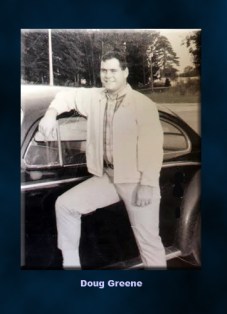
douggreenebackgroundThis year the Proustian rush has been more vivid than usual thanks to a phenomenon that was unthinkable on January 12, 1968: social media. Yesterday Doug Greene, my good friend from those days, posted on Facebook a picture of himself as he was then: a young airman in England. Looking at Doug’s familiar, young, and smiling face, I realized we shared an experience common to all youth: a total unawareness that time will pass, youth will fade, and the time will come when we have more days to look back on than forward to.


I haven’t seen Doug in decades, but I know we could both write vast autobiographical volumes about our lives since 1968. There would be chapters of comedy and tragedy in each volume, but I have no doubt we both look back with satisfaction on the lives we lived.

But on January 12 each year, I like to reflect on a period when I was aware I was completing one phase of my life and moving on to another.

The blessing of youth is that we seize that new phase with confidence that whatever the future years bring, it will be good.

God knows this is not always the case, and not every year is joyful or good.

But January 12 is my day to reflect on both my past and present.

And it’s a comforting reassurance that I can celebrate the good days long gone and relish the good days now at hand, surrounded by loved ones and connected with old, old friends.

January 12 is my day to take stock.

It’s the day I remind myself that my life – then and now – has been abundantly blessed.

blessingsandpeace

Posted in Uncategorized | Leave a comment

An Imperishable Gift

Thanks to brother Paul Jenks and sister Colleen Jenks for this very special Christmas gift.

The Weeds were my mother Mary’s great-grandparents. As I recall the family story, the elderly Mary Weed lived for a time with Mom’s parents on their Delaware County farm. Mom remembered her father addressing the old woman as “Mrs. Easy Weed,” which was either an expression of affection or Minnesota passive-aggression.

familyheirloomThis precious gift brings the Weeds alive and restores them to family gatherings.
Posted in Uncategorized | Leave a comment

Lies Our Teachers Told Us

feetofclay

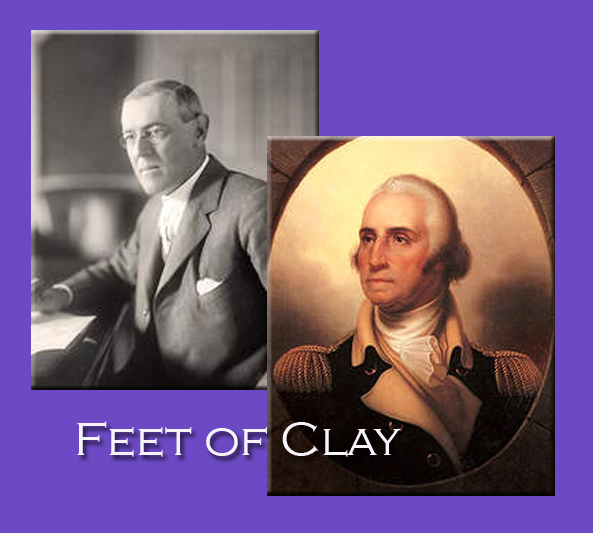
This fall some Princeton University students uncovered one of the worst kept secrets in American history: Woodrow Wilson, the 28th president of the United States, was a racist.

If these students had grown up reading Howard Zinn or Richard Shenkman, this wouldn’t have been a surprise. Unlike the historians who wrote our high school text books, these guys tried to tell the truth about U.S. history. The truth – and we didn’t read it in the thick history texts collecting dust in our school desks – included the genocide of native Americans, the horrors of slavery, the bloody imperialism of American expansion, the peccadillos of pious politicians, or the sexual predation of our greatest presidents.

No wonder history is so boring in the 11th grade.

One of my last interviews as a reporter for the Pottstown, Pa., Mercury, was with James W. Loewen, author of Lies My Teacher Taught Me, Everything Your American History Textbook Got Wrong.

On the phone, Loewen came across as a passionate man who never made his peace with the texts that lied to him, especially about some of our most beloved icons.

He was particularly incensed about the mistreatment of Helen Keller, known to most of us baby boomers as the woman who overcame blindness and deafness as dramatized in The Miracle Worker, and who  was featured in My Weekly Reader as she stroked President Eisenhower’s beaming face.

But what the history books left out was the fact that Keller was a far-left radical who campaigned for socialist candidates for U.S. president and openly supported the Soviet Union.

Loewen was also displeased about the incomplete depiction of President Wilson, described in most texts as a progressive leader whose vision of the League of Nations was squashed by short-sighted isolationists.

But, Loewen pointed out, Wilson was also a white supremacist who told “darky” stories in cabinet meetings and ordered the segregation of government offices. The proper Presbyterian president also denigrated any American who was not of white Northern European heritage.

In addition, Wilson – who posed as a man of peace – was chronic interventionist in foreign countries. Loewen wrote:

 “Under Wilson, the United States intervened in Latin America more often than at any other time in our history … In 1917 Woodrow Wilson … started sending secret monetary aid to the ‘White’ side of the Russian civil war … This aggression fueled the suspicions that motivated the Soviets during the Cold War …Wilson’s interventions in Cuba, the Dominican Republic, Haiti, and Nicaragua set the stage for the dictators Batista, Trujillo, the Duvaliers, and the Somozas.”

It’s no wonder that the Black Justice League has called upon Princeton, where Wilson was also president, to remove his name from buildings and institutions where he has been honored. However, given what has always been known about Wilson, the move seems belated.

And, given the truths Zinn, Shenkman, and Loewen have been eager to uncover, one must wonder how many other great figures are undeserving of the laurels we have bestowed on them.

Beginning with George Washington, a slave owner who was conflicted about the efficacy of the peculiar institution, especially after he calculated that the overhead costs of maintaining a slave population often cancelled out the benefits of free labor.

In his Pulitzer Prize winning biography, Washington: A Life, Gene Chernow reminds us of some disturbing facts about the Father of Our Country that were never highlighted in high school texts. As a general and later as president, Washington was attended by a large retinue of slaves dressed in uniforms bearing his family crest. When the U.S. capital was temporarily lodged in Philadelphia, President Washington brought a large number of his slaves along to run his household. He circumvented a Pennsylvania law that automatically freed slaves who resided in the commonwealth for more than six months by returning them temporarily to Mount Vernon every five months.

Washington freed all his slaves in his will (effective upon the death of his wife Martha, which surrounded her with people who looked forward to her passing). And few historians believe Washington’s enormous contributions to U.S. history should be lost in the reality that he was a slave-owning Southern aristocrat who acted like one.

There are other great figures of U.S. history who don’t deserve all the nice things high school texts say about them. President Jefferson had a slave mistress who carried several of his children. President Jackson’s relocation of Native American communities was genocidal and brutal. Even the Great Emancipator, President Lincoln, did not believe African Americans were his biological or intellectual equal.

And in a seemier side of history, which may or may not call into question their political performance, Presidents Cleveland, Harding, Franklin Roosevelt, Eisenhower, Kennedy, and Johnson were all purported to have extra marital affairs.

But given that much we think we know about American History is not true, including the assumed purity of the greats, the question remains what we should do about it.

Should we tear down their statues and name plates and cleanse their sordid memories from our public and private institutions?

Personally, I would hope not.

But I think it is time that we look more carefully at the history that has preceded us and acknowledge that it is rarely as simple and as benign as we thought it was.

I hope President Wilson’s name will not be expunged from the institutions he led. But I hope we will also be less naive about who he was, where he came from, and the human frailties that demeaned him.

And if an unreconstructed racist and vigorous imperialist was chosen as our leader for eight years, what does that say about the darkness of the times and the ignorance of those who put him in power?

Those are the questions we need to answer. And the question will never come up if we simply erase the names of the icons whose feet of clay offend us.

Posted in Uncategorized | 1 Comment