Unseen Hope

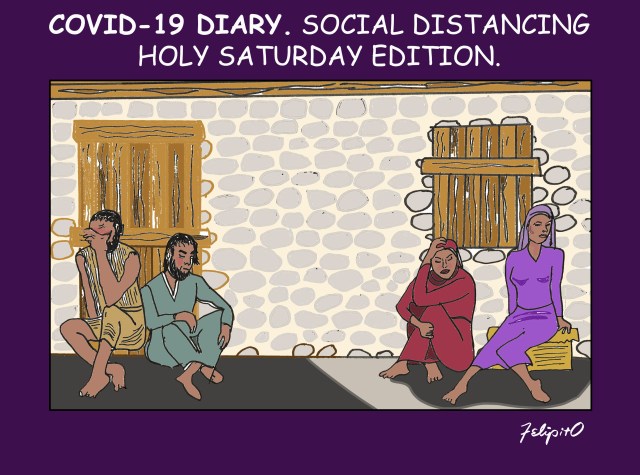
SOCIALDISTANCINGHOLYSATURDAY

Posted in Uncategorized | Leave a comment

You Heard It From Her

themagdalenegirl

Posted in Uncategorized | Leave a comment

LentMadness.org makes Lent a Joy

ITSHARRIETOVERJOSEPH

Posted in Uncategorized | Leave a comment

Teach a Kid to Wash Her Hands and …

TRUTHTELLER1

Posted in Uncategorized | Leave a comment

Ancestor Worship

whereswaldo1

Posted in Uncategorized | Leave a comment

Easter Lilies

JCEXPLAINS

Posted in Uncategorized | Leave a comment

Palm Sunday 2020

VIRTUALHOSANNAS

Posted in Uncategorized | Leave a comment

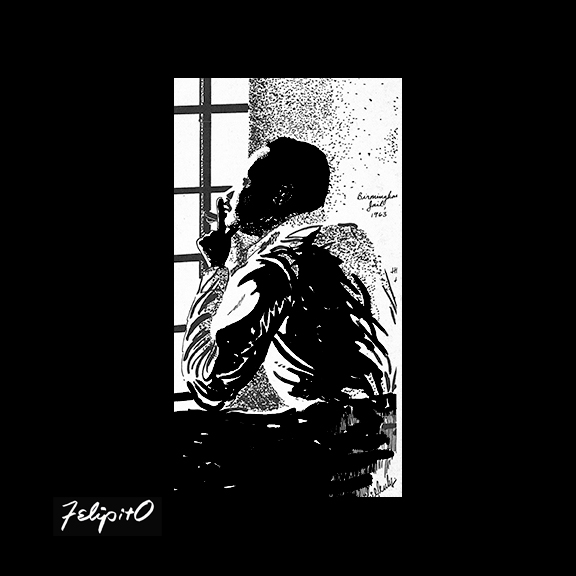
Remembering April 4

april42020

Posted in Uncategorized | Leave a comment

Going Together

PEERS1

Years ago the Divine Doc M and I were driving from Manhattan to Utica, N.Y. It’s a four hour drive and we made it just south of Albany before we needed to pull into the Thruway’s Malden service center. We were on our way to a scholarship awards ceremony for our daughter Victoria and were driving happily through late season snow squalls and driving rain.

Our first order of business was a visit to the restrooms. Martha carried a flannel shirt and slacks so she could change into more comfortable driving attire, and I slipped unencumbered into the men’s room.

As every dude knows, public bathrooms are places for minding one’s own business and what happens in men’s rooms stays in men’s rooms. Two men walked in just behind me and lined up at the row of urinals on each side of me. Both wore well-cut gray suits. Both pulled their jackets slightly apart, and after simultaneous zipping sounds the three of us were gazing slightly upwards and heaving contented sighs.

As we completed our missions, each affixing his gaze on the tiles in front of us, we re-zipped, readjusted our clothing and moved toward the row of sinks. Out of the corner of my eye I realized that one of the men seemed familiar and I stole a glance at his face. It was the former governor of New York, David Paterson.

The other man may have been an aide or a security agent. The three of us washed diligently and shook the water from our hands. Two of us stood back so the Governor could have first dibs at the paper towels, and then we departed.

Outside the bathroom,I watched as other customers began to recognize Paterson, who was simultaneously smiling and nodding and quickening his pace to get out of the place. He stopped ever so briefly to shake hands with an uncooperative child whose parents were pushing her toward him. When the Governor realized the kid was squirming away he turned abruptly and escaped through the open doors. As almost everyone knows, the former governor is legally blind, but that didn’t slow him down. In an instant he was gone.

It was several minutes before Martha emerged from the women’s room. As seasoned journalists, we try not to be impressed by celebrities, but this was one story on which I could not sit.

“You’ll never guess who was in there,” I said, gesturing to the men’s room. “Governor Paterson!”

“You’re kidding. Where is he?”

“He left,” I said.

“Did you get his picture?”

“Um. Nooo.”

“Why not?”

“It was the men’s room,” I said. “You don’t take pictures in the men’s room.”

“You should have gotten a picture.”

We bought some food and carried it to a table. I grabbed my smart phone and tapped an update to my Facebook status:

“Ran into ex-Gov David Paterson in the men’s room at the Malden service area on the Thruway,” I wrote. “Was he ever surprised to see me.”

Three hours later we pulled into a small motel in Utica and began to unwind for the day. I pulled out my phone to see if there were any messages. There on the small screen was evidence that meeting celebrities in bathrooms may be a universal and memorable experience.

The first Facebook response was from Aidsand Wright-Riggins III, then executive director of American Baptist National Ministries.      “Several years ago I was in the men’s room at the train station in NYC.” Aidsand wrote. “Looking straight ahead, as we’ve been taught to do, doing my man thing, I heard two voices that sounded really familiar to me. I looked around. To my right was Jesse Jackson. To my left was Al Sharpton. I managed to resist the temptation to try to shake hands.”

I read the response to Martha, who said all the talk about Men’s Room Protocols made her think of the lyrics to “Lovely Ladies” in the musical Les Miserables.

Old men, young men, take ’em as they come, 
Harbor rats and alley cats and every kind of scum:
Poor men, rich men, leaders of the land,
See them with their trousers off they’re never quite as grand. 

Martha also recalled standing in an interminable queue to the ladies’ room in a Broadway theater with an unexpectedly patient Liza Minelli, who probably grew up in Broadway bathroom lines. “There is no parity in lines to Broadway bathrooms,” Martha added, philosophically.

My brother Jim posted his own experience on Facebook: “I once peed next to Ed Bradley at a Broadway show. He still talks about it.”

Amid several additional FB comments, my friend Martin Bailey observed, “Sounds like you’ve got the makings of a great book.”

Now there’s an idea.

The proposition jogged my memory of an event years ago in New York Avenue Presbyterian Church in Washington. The 1976 presidential campaign had begun and the church hosted an ecumenical gathering called, “Religion and the Presidency (RAP).” All the major Democratic candidates attended except the ultimate winner, Jimmy Carter – but no one cared because it was early in the campaign and he was an unknown long shot. The other candidates were more prominent and more likely: Sargent Shriver, Eugene McCarthy, Morris Udall, and Pennsylvania Governor Milton Shapp.

At one point during that hectic meeting I joined the testosteronal crowd that jammed into the church bathroom with all these potential leaders of the free world. I stood unobtrusively next to Sargent Shriver, staring politely ahead. But the image that sticks with me is of the petite Shapp squeezed unwillingly between ex-basketball star Udall and the lanky McCarthy. There is no parity in men’s rooms either.

What’s the big deal about meeting famous people in toilets? Jon Fox, a one-term Republican congressman from Pennsylvania, was delighted to discover that his House office had once been occupied by Congressman Richard M. Nixon. Fox routinely escorted his visitors to the bathroom so they could share an historic commode with a disgraced former president.

I had a similar experience at the original Ebenezer Baptist Church in Atlanta, where Martin Luther King Sr. and Jr. had offices. During a World Council of Churches meeting in the church dining hall, I excused myself to use the bathroom. And as I stared into the scratched and stained urinal, a shiver came over me. Is this, I asked myself, the urinal – he – used?

There’s no real secret to the feelings that come over us when we engage in a universal and necessary act with rich or prominently powerful people. In this over-mediated age where film and video and blue tooth elevate the merely famous to demigods, it’s reassuring to be reminded that it’s merely an illusion. All human beings are created in the image of God, but God did not create all of us as stars. On a high-res flat screen TV, your governor or president is elevated far above you. But standing next to the dude at a urinal, you remember that God made us all the same.

There is an oft-told church tale that comes to my mind whenever I am in a crowded men’s room. I assume the story is apocryphal, but it makes the point.

According to the story, several Orthodox clergy gathered in Manhattan’s Interchurch Center for an ecumenical meeting. During a break all of the priests adjourned to the men’s room – including Iakovos, the archbishop of the Greek Orthodox Archdiocese of America.

“Your Eminence,” one of the young priests said, “How shall we conduct ourselves in such a place? Shall we line up according to ecclesial rank? Shall we address each other by our titles?”

“Brothers, relax,” Iakovos said. “We are all peers in here.”

Posted in Uncategorized | Leave a comment

Colson: Walking Over His Grandmother for Jesus?

NIXONCOLSONLEWISLooking through some old blog posts, I came across a reference to Charles Colson’s death eight years ago this April 21. He was 80.

Boomers and other chronologically gifted persons may recognize the name but I suspect most will not. I’m willing to bet none of my six adult children know who he was. In the 1970s and 1980s he was nationally famous, mostly because of his connection with political scandal and, later, because of his religious fervor.

Toward the end of his life he had faded into the obscurity of right-wing political and evangelical extremism that was not as powerful as it is today. Indeed, had Colson lived beyond his 80th birthday, I wonder: would he have become a leader of the Trump pack of theologically dim zealots? Or would he have warned the nation about the disastrous consequences of following an uneducated, amoral, racist, self-obsessed, biblically ignorant political leader”?

Colson, as many will recall, was a high-ranking advisor to President Richard M. Nixon, best known for a crack about his campaign strategy, “I’d walk over my grandmother to assure Nixon’s re-election.” He was the dean of the dirty tricks school of politics which, though not invented by Nixon, was employed with singular creativity during his era.

Some of Colson’s tricks turned out to be illegal and he pleaded guilty to obstructing the investigation of a break-in at the office of Dr. Daniel Ellsberg, leaker of the Pentagon Papers and a Nixon critic. Charges that Colson had orchestrated the break-in were dismissed for lack of concrete evidence, but he was ordered to prison in 1974 and served seven months of a three-year sentence.

When I interviewed Colson in 1977, I discovered the fastest way to witness his famous red-faced sneer was to suggest the Alan Wood Prison was a country club for white collar criminals. “It wasn’t,” he hissed, glaring at me. Whatever jail had been like for him, some may also remember that it inspired Colson – by then famously re-born as a Christian – to found Prison Fellowship, an evangelical organization to lead prisoners to Jesus.

I met Colson in his small Prison Fellowship office in the late fall of 1977. Sitting in the waiting room with me was Ken Clawson, another Watergate figure (best known for his plea for mercy to Bob Woodward, “I have a wife and a family and a dog and a cat!”) Clawson’s presence made me wonder if all Watergate figures hung out together, or if he was seeking spiritual guidance from Colson. But Colson, in a starched button-down shirt and paisley tie, emerged before I could talk to Clawson and escorted me to a chair in front of his desk.

Except for his reaction to my country club reference, Colson was charming and soft spoken during out hour-long conversation. He was disarmingly likable; I was so disarmed, in fact, that the article I wrote about him in the January 1978 issue of The American Baptist magazine outraged most of my liberal friends who doubted the sincerity of his conversion. American Baptist prison chaplains were incensed that I gave attention to Colson rather than to them. Bill Cober, head of the American Baptist Home Mission Society, was furious that Colson had been quoted as saying Walter Rauschenbusch – a Baptist social activist, pacifist and saint – was not Christ centered. Colson was flat wrong on that point and I argued with him about it but elected not to include my own views in the article. Colson listened politely to my insistence that Rauschenbusch was devoutly Christ centered and shrugged non-committally.

I stayed in touch with Colson for several years, giving rise to rumors among my Baptist colleagues that he and I were buds. He once asked me if I’d like a job writing articles under his byline, which was flattering but the conversation never developed into a bonafide offer. Later, when I asked Colson to write something for The American Baptist, I got a glimpse of what the job might have been like. He quickly accepted my invitation and told me to contact his chief of staff. I called and began telling this obviously beleaguered staffer what I needed. He was silent for several moments before he drew an exasperated breath. “Shit,” he said. “Does Chuck think he doesn’t give us enough to do?”

Over the years Charles Colson drifted away from the mere Christianity of his idol, C.S. Lewis, and became associated with the Christian right-wing. His evangelical tactics also hardened to the extent that some of his critics suggested “Colson would walk over his grandmother for Jesus.”

But for a brief period years ago, I had nothing but the friendliest of feelings for the guy. My admiration – for better or for worse – is all too detectable in my editorial of January 1978:

Chuck Colson and the Social Gospel

A secretary had just told me that Mr. Colson would be delayed, and I settled in my chair to relax a few more minutes.

This is really strange, I told myself, listening to my friend Fred Rhodes as he bantered reassuringly. It wasn’t so long ago that I was a student protesting the Vietnam War, and casting helpless glances at the Nixon White House. I had been told about the men inside, about their callous indifference to the suffering in Vietnam. Sometimes I had nearly wept with frustration because the men in the White House wouldn’t even listen to our pleas – had, in fact, called us bums.

One of those men had been Charles W. Colson, special counsel to the President. White House tough guy. The archfiend. One of the most powerful men in the world.

Unexpectedly, he came through the door. The face I used to imagine twisted into a perpetual snarl was smiling warmly. His hair was slightly longer than it had been in the White House days, but it was carefully groomed. His blue shirt was neatly pressed and I was surprised to discover that he is about six inches taller than he looks on television. “Chuck Colson,” he said evenly, extending his hand. Soon I was sitting at his side, sticking a microphone in his face.

I had to get it off my chest. I told Chuck Colson about my errant youth on the field of protest, and admitted that I still felt pretty much the same way I did then.  “Is there a ground of reconciliation between us?”

He laughed. “Sure,” he said without hesitation. “Jesus Christ.” And the strangeness began to melt away. Reconciliation.

People who have read Chuck Colson’s best-selling book, Born Again, are familiar with that theme of reconciliation. It is one of the remarkable distinctives of his testimony.

Here was the White House “hatchet man,” the Nixon functionary who was supposed to have said (he never did) that he would run over his grandmother to assure Nixon’s re-election. The story has now been told time and again how Colson, sensing the emptiness of his life, invited Jesus Christ to take it over, how that new life in Christ had led Colson to deep fellowship with former Senator Harold Hughes and Federal Reserve Chairman Arthur Burns – men who had been his enemies.

The story includes countless occasions when men and women who had been in opposite political poles from Colson had rallied to his side when he needed to be “Christ’s Man” and accept a prison sentence for his Watergate misdeeds.

Few people in public life have symbolized God’s power of redemption and reconciliation more than Chuck Colson. And I would have to confess that I was slightly moved to be sitting in Colson’s office. The former student protestor who Had been immobilized by a sense of powerlessness and insignificance; the former White House aide who had been intoxicated by his sense of power and position. And we were easily exploring a common, familiar ground against which all other differences fade: Jesus Christ.

In fact, I found it a bit disquieting to find myself in such agreement with Colson. I had gone to Washington at the invitation of Fred Rhodes, former government official and former vice president of the Southern Baptist Convention, in order to do a story on the Prison Fellowship founded by Colson and of which Fred is president.

As I was asking Chuck Colson about the Prison Fellowship and its services to society, it occurred to me that he was beginning to sound a bit non-Nixonian. I pointed out that the Prison Fellowship and its efforts at reform sounded like the Rauschenbusch Social Gospel. “Will somebody someday accuse you of being a political liberal?” I asked? “Rauschenbusch believed man could do good in his own right,” he said slowly. “He did not have Christ as the center of his life. And I think the disciples of  Rauschenbusch down through the years  have … largely been consumed by their own social concerns, but believed they were doing it by themselves, not Christ.”

He noted the other side of the spectrum, the church’s conservative wing, people who emphasize life style, soul saving, salvation. “I come out somewhere in the middle,” he mused. “So long as He lives in me and leads me, it is Christ and not Chuck Colson. But I believe that Jesus Christ calls us to a social concern … We are commanded to love the world, and it seems to me that we are being called to a lot more than sitting in a pew, praying one hour a week, and being happy that we are saved and going to heaven. I believe that Christianity hasn’t failed, it just hasn’t been tried.”

As our interview ended, I sheepishly shoved toward him my copy of Born Again for an autograph.

As he scribbled on the flyleaf, he chuckled, and asked, “Well? Am I a liberal?” I stammered something noncommittally.

But it was clear to me that there weren’t many differences on things that really mattered between the former liberal student and the former conservative presidential aide.

That may have been a small, even routine miracle for those who trust Jesus Christ.

But it continues to astonish me.

Posted in Uncategorized | Leave a comment